Groundwater control becomes significantly more challenging when construction projects encounter low-permeability soils such as clay, silty clay, and fine-grained silts. Traditional dewatering methods like wellpoint systems and deep wells often rely on the free movement of groundwater through the soil. In low-permeability formations, groundwater moves slowly, making conventional systems less effective.
In these situations, eductor dewatering systems for low-permeability soils provide an effective solution. Eductor systems are specifically designed to remove groundwater from soils with limited permeability, allowing contractors to achieve groundwater control in conditions where other dewatering methods may struggle.
This guide explains how eductor dewatering systems for low-permeability soils work, their components, design considerations, installation procedures, advantages, limitations, and common applications.
What Is an Eductor Dewatering System?
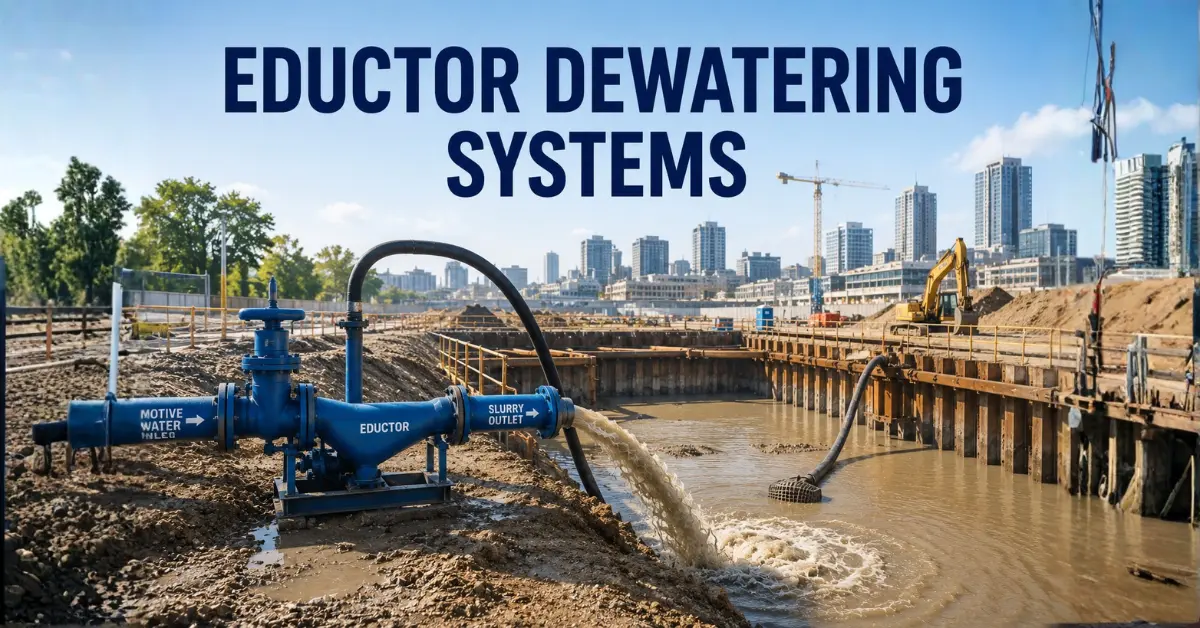
An eductor dewatering system is a groundwater control method that uses high-pressure water circulated through specially designed eductor wells to create suction and extract groundwater from surrounding soil.
Unlike conventional pumping systems that directly remove water from a well, eductor systems use the venturi principle to generate a vacuum effect. This vacuum draws groundwater toward the well and removes it from the ground.
Because groundwater movement is often limited in fine-grained soils, eductor dewatering systems for low-permeability soils are widely used in situations where wellpoints and deep wells cannot achieve sufficient groundwater drawdown.
How Eductor Dewatering Systems Work
The operation of eductor dewatering systems for low-permeability soils is based on hydraulic principles.
The process typically involves:
- High-pressure water is pumped through a supply pipe.
- Water enters the eductor nozzle installed within the well.
- The nozzle creates a vacuum through the venturi effect.
- Groundwater is drawn into the well through the screen.
- The extracted groundwater mixes with the recirculated water.
- The combined flow returns to the surface through a return pipe.
- Water is separated and recirculated through the system.
This continuous process gradually lowers groundwater levels around the excavation.
Because the system creates suction directly within the soil, eductor dewatering can be highly effective even when groundwater moves slowly through fine-grained formations.
Why Eductor Dewatering Is Used in Low-Permeability Soils
Traditional dewatering methods depend on groundwater flowing freely toward wells.
In low-permeability soils:
- Groundwater movement is slow.
- Hydraulic conductivity is low.
- Pumping rates are limited.
- Conventional wells may produce insufficient drawdown.
Eductor dewatering systems for low-permeability soils overcome these challenges by creating localized suction that actively draws groundwater toward the well.
This makes them particularly effective in:
- Clay soils
- Silty clay
- Fine-grained silts
- Mixed cohesive soils
Main Components of an Eductor Dewatering System
A properly designed eductor system contains several critical components.
Eductor Wells
Eductor wells are installed around the excavation perimeter.
These wells contain the eductor units that generate vacuum pressure.
Well Screens
Screens allow groundwater to enter the well while preventing excessive soil migration.
Eductor Assemblies
The eductor assembly includes:
- Nozzle
- Venturi tube
- Suction chamber
These components create the vacuum effect that drives groundwater extraction.
Supply and Return Pipes
Separate pipes deliver high-pressure water to the eductor and return the combined flow to the surface.
High-Pressure Pumps
Specialized pumps circulate water through the system at the required pressure.
Control Equipment
Monitoring instruments help track groundwater levels, pressure, and overall system performance.
Soil Conditions Suitable for Eductor Dewatering
The effectiveness of eductor dewatering systems for low-permeability soils depends largely on soil conditions.
Ideal Soil Types
Eductor systems perform particularly well in:
- Clay
- Silty clay
- Fine silts
- Clay-silt mixtures
Moderate Conditions
They may also perform adequately in:
- Sandy silts
- Mixed cohesive soils
Less Suitable Conditions
Highly permeable soils such as:
- Coarse sand
- Gravel
- Sand and gravel mixtures
are generally better suited to wellpoint or deep well systems.
When Should Eductor Dewatering Be Used?
Eductor dewatering systems for low-permeability soils are commonly selected when:
- Excavations extend below the groundwater table.
- Soil permeability is very low.
- Conventional dewatering methods are ineffective.
- Groundwater control is required at significant depths.
- Excavation stability is critical.
- Long-term groundwater lowering is needed.
Many urban construction projects use eductor systems when working in cohesive soil formations.
Design Considerations for Eductor Dewatering Systems
Successful groundwater control depends on proper design.
Groundwater Conditions
Engineers evaluate:
- Groundwater levels
- Seasonal variations
- Recharge rates
- Aquifer properties
Soil Permeability
Permeability testing helps determine whether eductor systems are appropriate.
Excavation Depth
The required drawdown influences well depth and system configuration.
Well Spacing
Proper spacing ensures overlapping zones of influence and consistent groundwater lowering.
Pump Capacity
Pump performance must support adequate pressure throughout the system.
Project Duration
Long-term projects may require more robust system designs and monitoring programs.
Installation Process for Eductor Dewatering Systems
The installation of eductor dewatering systems for low-permeability soils typically follows a structured process.
Step 1: Site Investigation
Engineers perform:
- Borehole drilling
- Soil testing
- Groundwater monitoring
- Permeability assessments
Step 2: System Design
The design process determines:
- Number of wells
- Well depth
- Well spacing
- Pump requirements
- Expected drawdown
Step 3: Well Installation
Wells are drilled and screened within the groundwater-bearing layer.
Step 4: Eductor Installation
Eductor assemblies are installed within the wells and connected to supply and return piping.
Step 5: Pump Setup
High-pressure pumps and circulation systems are installed.
Step 6: System Testing
Performance testing verifies groundwater response and system efficiency.
Step 7: Operational Monitoring
Groundwater levels are monitored throughout construction.
Advantages of Eductor Dewatering Systems for Low-Permeability Soils
Several advantages make eductor systems valuable for difficult groundwater conditions.
Effective in Fine-Grained Soils
This is the primary advantage of eductor dewatering.
Significant Groundwater Drawdown
The system can achieve groundwater lowering where conventional systems fail.
Deep Groundwater Control
Eductor systems can be installed at considerable depths.
Reduced Excavation Risk
Improved groundwater control helps maintain excavation stability.
Flexible System Design
Configurations can be adapted to a wide range of project requirements.
Limitations of Eductor Dewatering Systems
Despite their effectiveness, eductor systems have limitations.
Higher Installation Costs
Specialized equipment increases project costs.
Greater Design Complexity
Professional engineering design is essential.
Higher Energy Consumption
Continuous water circulation requires significant pumping energy.
Increased Maintenance Requirements
System performance depends on regular monitoring and maintenance.
Slower Groundwater Response
Drawdown may occur more gradually compared to high-capacity deep well systems.
Common Applications of Eductor Dewatering Systems
Eductor dewatering systems for low-permeability soils are used in a variety of construction sectors.
Basement Excavations
Deep urban basements often encounter clay-rich soils.
Underground Parking Structures
Large excavations frequently require specialized groundwater control.
Utility Infrastructure Projects
Pipelines and underground utility installations may benefit from eductor systems.
Transportation Projects
Road tunnels and underground transit facilities often require dewatering in low-permeability formations.
Industrial Construction
Factories and industrial facilities commonly require groundwater control during excavation activities.
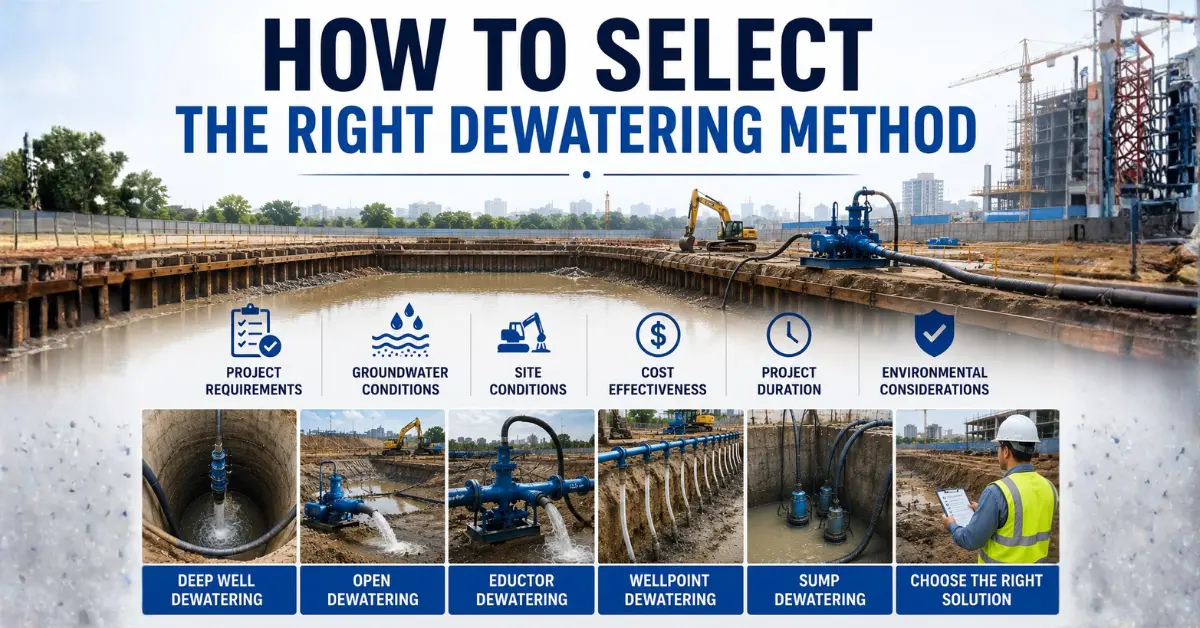
Eductor Dewatering vs Other Dewatering Methods
| Feature | Eductor Dewatering | Wellpoint Dewatering | Deep Well Dewatering |
| Suitable Soil | Clay & Silt | Sand & Silt | Sand & Gravel |
| Groundwater Control | Excellent | Good | Excellent |
| Installation Cost | High | Medium | High |
| Excavation Depth | Deep | Shallow to Medium | Deep |
| Complexity | High | Medium | Medium |
This comparison highlights why eductor dewatering systems for low-permeability soils are often selected when groundwater control is required in fine-grained formations.
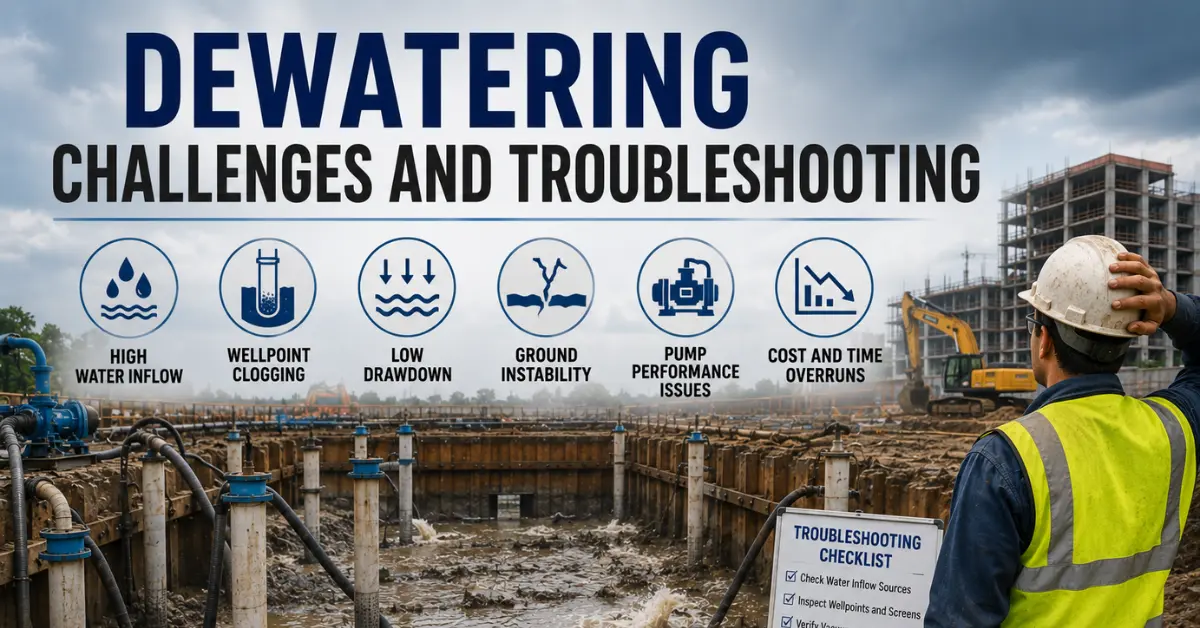
Common Challenges and Troubleshooting
Insufficient Vacuum Performance
System pressure should be checked regularly to maintain effective suction.
Screen Clogging
Fine particles may reduce groundwater flow into the wells.
Pump Problems
High-pressure pumps require routine maintenance.
Groundwater Variability
Unexpected groundwater conditions may require adjustments to system operation.
Monitoring Issues
Accurate groundwater monitoring is essential for maintaining performance.
Best Practices for Successful Eductor Dewatering
To maximize system effectiveness:
- Conduct detailed site investigations.
- Confirm soil permeability characteristics.
- Design wells based on groundwater conditions.
- Monitor groundwater levels regularly.
- Maintain pumps and piping systems.
- Perform routine inspections.
- Prepare contingency plans for equipment failures.
These best practices improve reliability and reduce project risks.
Frequently Asked Questions
What is an eductor dewatering system?
An eductor dewatering system uses high-pressure water and vacuum generation to remove groundwater from low-permeability soils.
Why are eductor systems used in clay soils?
Clay soils have low permeability, making conventional dewatering methods less effective. Eductor systems create suction that actively draws groundwater toward the wells.
What types of projects use eductor dewatering?
Common applications include basement excavations, underground structures, utility projects, transportation infrastructure, and industrial construction.
How deep can eductor systems operate?
Eductor systems can provide groundwater control for relatively deep excavations, depending on site conditions and system design.
Are eductor systems more expensive than wellpoints?
Yes. Eductor systems generally have higher installation and operating costs due to their specialized equipment and complexity.
Conclusion
Eductor dewatering systems for low-permeability soils provide an effective groundwater control solution for construction projects where traditional methods may not perform adequately. By using vacuum-assisted groundwater extraction, these systems can achieve significant drawdown in clay, silt, and other fine-grained soils.
Although eductor systems involve greater design complexity and higher installation costs, they remain one of the most reliable methods for groundwater control in challenging soil conditions. With proper site investigation, engineering design, installation, and monitoring, eductor dewatering systems can help maintain excavation stability, improve safety, and support successful project completion.