Groundwater control is a critical requirement for many large-scale construction and infrastructure projects. When excavations extend below the water table, uncontrolled groundwater inflows can compromise soil stability, delay construction activities, and create significant safety risks. In such situations, deep well dewatering is often the preferred solution.
Deep well dewatering is one of the most effective methods for lowering groundwater levels around deep excavations. Unlike wellpoint systems, which are typically used for shallow to medium-depth projects, deep well systems are designed to handle larger groundwater volumes and achieve greater drawdown depths.
This guide explains how deep well dewatering works, its components, design considerations, installation process, advantages, limitations, and common applications in construction projects.
What Is Deep Well Dewatering?
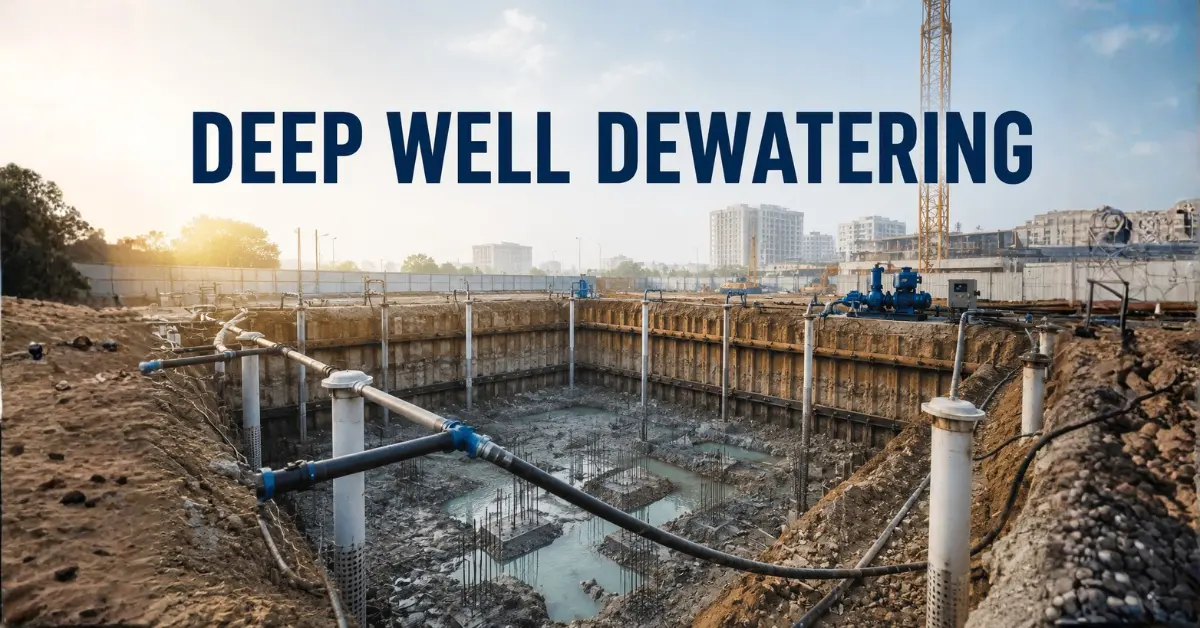
Deep well dewatering is a groundwater control method that uses drilled wells equipped with submersible pumps to lower groundwater levels around an excavation.
The wells are installed around the excavation area and extend below the desired groundwater level. As groundwater is pumped from the wells, the surrounding water table is lowered, creating dry and stable conditions for excavation and construction activities.
Deep well systems are commonly used for:
- Deep excavations
- High-rise building construction
- Underground parking structures
- Infrastructure projects
- Industrial developments
- Bridge and tunnel construction
Because of its ability to achieve substantial groundwater drawdown, deep well dewatering is widely used on projects where simpler dewatering methods may not be sufficient.
How Does Deep Well Dewatering Work?
Deep well dewatering works by continuously extracting groundwater through strategically placed wells surrounding an excavation.
The process generally follows these steps:
- Wells are drilled around the project site.
- Well screens are installed within water-bearing soil layers.
- Submersible pumps are placed inside the wells.
- Pumps continuously extract groundwater.
- Groundwater levels gradually decline around the excavation.
- The lowered groundwater level is maintained throughout construction.
As pumping continues, a cone of depression forms around each well. When multiple wells operate together, these cones overlap, lowering the groundwater table across the entire excavation area.
This reduction in groundwater pressure improves soil stability and keeps excavation areas dry.
Main Components of a Deep Well Dewatering System
A properly designed deep well system consists of several critical components.
Deep Wells
Deep wells are drilled boreholes designed to intercept groundwater-bearing formations.
Their depth depends on:
- Excavation depth
- Groundwater level
- Geological conditions
- Required drawdown
Well Screens
Well screens are installed within the groundwater-bearing zone.
They allow water to enter the well while preventing excessive soil particles from entering the system.
Filter Pack
A filter pack is placed around the screen to improve groundwater flow and reduce sediment infiltration.
Submersible Pumps
Submersible pumps are the heart of the system.
These pumps are installed below groundwater level and continuously remove water from the well.
Discharge Piping
Discharge pipes transport groundwater away from the construction site to approved discharge locations.
Monitoring Equipment
Observation wells and monitoring instruments help engineers track groundwater levels and system performance.
When Should Deep Well Dewatering Be Used?
Deep well dewatering is typically selected when project conditions exceed the capabilities of simpler dewatering methods.
It is most suitable when:
- Excavations are deep.
- Groundwater inflows are high.
- Large construction areas require dewatering.
- Soil conditions have high permeability.
- Long-term groundwater control is necessary.
Projects involving deep foundations, underground structures, and major infrastructure developments frequently rely on deep well dewatering to maintain safe excavation conditions.
Soil Conditions Suitable for Deep Well Dewatering
Deep well dewatering performs best in highly permeable soils where groundwater can flow freely toward the wells.
Suitable soil types include:
Sand
Sandy soils typically allow efficient groundwater movement and excellent well performance.
Gravel
Gravel formations often produce high groundwater yields and are ideal for deep well systems.
Sand and Gravel Mixtures
These mixed soils commonly provide favorable groundwater conditions for deep well dewatering.
Weathered Rock Formations
Certain fractured rock formations may also be suitable, depending on groundwater flow characteristics.
Deep well systems are generally less effective in clay-rich soils because groundwater movement is significantly restricted.
Design Considerations for Deep Well Dewatering
Successful deep well dewatering requires careful engineering design.
Several factors influence system performance.
Groundwater Conditions
Engineers must evaluate:
- Groundwater levels
- Seasonal fluctuations
- Aquifer characteristics
- Groundwater recharge rates
These factors determine pumping requirements and well locations.
Excavation Depth
The required groundwater drawdown must extend below the lowest excavation level while maintaining an appropriate safety margin.
Soil Permeability
Permeability influences groundwater flow rates and determines the number of wells required.
Well Spacing
Wells must be spaced correctly to achieve continuous groundwater lowering across the excavation area.
Improper spacing can create zones of inadequate drawdown.
Pump Capacity
Each pump must be capable of handling expected groundwater inflows while maintaining stable system performance.
Nearby Structures
Excessive groundwater lowering can affect adjacent buildings, roads, and utilities.
Settlement risks should always be evaluated during design.
Deep Well Installation Process
The installation process involves several carefully planned stages.
Step 1: Site Investigation
The project begins with a detailed hydrogeological assessment.
This may include:
- Borehole drilling
- Groundwater monitoring
- Soil sampling
- Permeability testing
Step 2: Well Design
Engineers determine:
- Well depth
- Screen length
- Screen location
- Filter pack requirements
- Pump specifications
Step 3: Drilling Operations
Specialized drilling equipment creates boreholes at designated locations around the excavation.
Step 4: Screen and Filter Installation
Well screens and filter packs are installed to facilitate groundwater collection and maintain well efficiency.
Step 5: Pump Installation
Submersible pumps are lowered into the wells and connected to discharge systems.
Step 6: System Testing
The system is tested to verify pumping capacity and groundwater response.
Step 7: Operational Monitoring
Groundwater levels are monitored continuously throughout the project.
Advantages of Deep Well Dewatering
Deep well dewatering provides several important advantages for large construction projects.
Effective for Deep Excavations
It can achieve substantial groundwater drawdown that would be difficult with other methods.
High Pumping Capacity
Large groundwater volumes can be removed efficiently.
Suitable for Large Projects
Deep well systems can dewater extensive construction areas.
Long-Term Reliability
When properly designed, deep well systems provide stable performance over extended periods.
Reduced Surface Congestion
Compared to some alternative methods, deep wells require fewer surface components.
Limitations of Deep Well Dewatering
While highly effective, deep well dewatering has certain limitations.
Higher Initial Cost
Drilling operations and pump installations can increase project costs.
Specialized Equipment Required
Installation requires experienced contractors and specialized drilling equipment.
Reduced Effectiveness in Low-Permeability Soils
Clay-rich formations often limit groundwater flow into the wells.
Monitoring Requirements
Continuous monitoring is necessary to maintain system performance and manage risks.
Common Applications of Deep Well Dewatering
Deep well dewatering is used across a wide range of industries and construction sectors.
High-Rise Building Construction
Deep foundations often require extensive groundwater control.
Underground Parking Structures
Large underground excavations frequently rely on deep well systems.
Infrastructure Projects
Road tunnels, transportation facilities, and utility corridors often require deep groundwater lowering.
Industrial Facilities
Factories, warehouses, and processing plants commonly use deep well dewatering during construction.
Bridge Construction
Bridge foundations and substructure work often require temporary groundwater control.
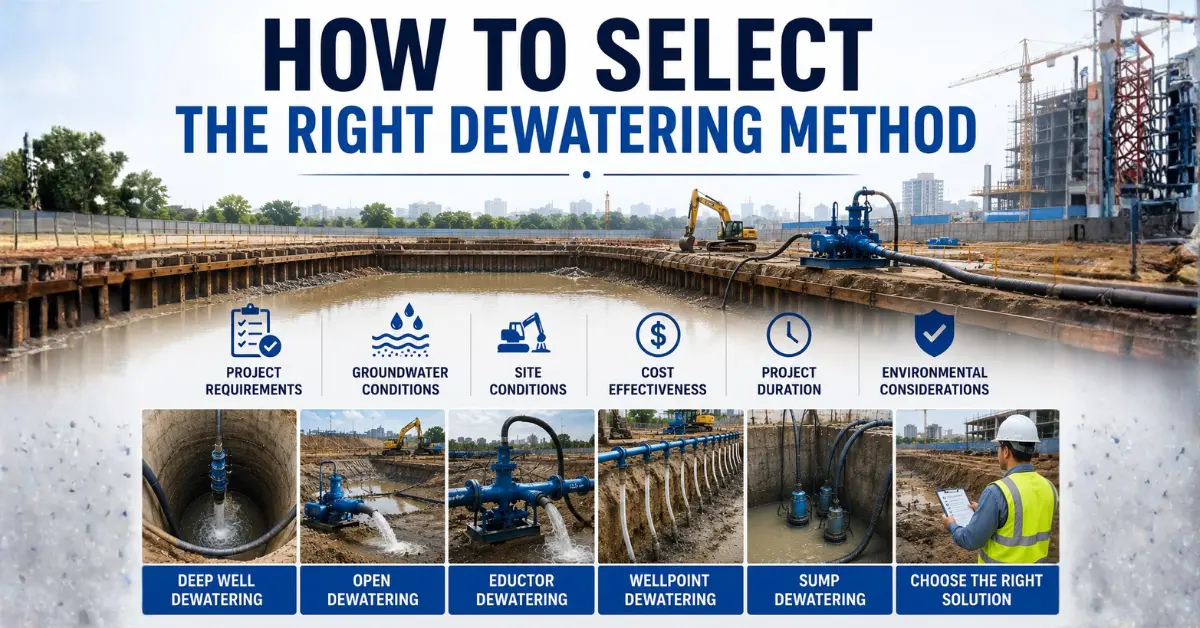
Deep Well Dewatering vs Wellpoint Dewatering
Choosing between deep well dewatering and wellpoint dewatering depends on project requirements.
| Feature | Deep Well Dewatering | Wellpoint Dewatering |
| Excavation Depth | Deep | Shallow to Medium |
| Groundwater Volume | High | Moderate |
| Number of Wells | Fewer | Many |
| Pump Type | Submersible Pumps | Vacuum Pumps |
| Installation Cost | Higher | Lower |
| Suitable Area | Large Sites | Smaller Sites |
In general, deep well systems are preferred for deeper excavations and larger projects, while wellpoint systems are more economical for shallow groundwater control.
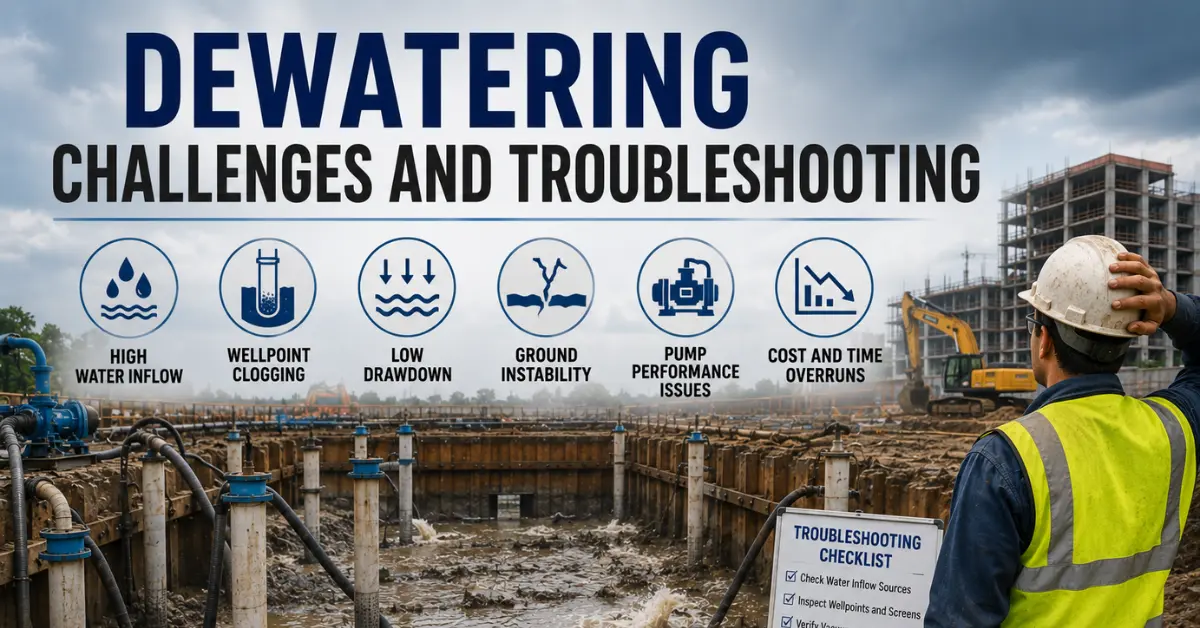
Common Challenges and Troubleshooting
Pump Failure
Unexpected pump failures can lead to rapid groundwater recovery and excavation flooding.
Backup pumps should always be available.
Screen Clogging
Fine sediments can reduce well efficiency and lower pumping performance.
Regular maintenance may be necessary.
Excessive Settlement
Groundwater lowering can cause soil settlement around nearby structures.
Monitoring programs help detect potential issues early.
Variable Groundwater Conditions
Unexpected groundwater inflows may require adjustments to pumping rates or additional wells.
Best Practices for Successful Deep Well Dewatering
To maximize the effectiveness of deep well dewatering, contractors and engineers should follow established best practices.
- Conduct comprehensive site investigations.
- Design wells based on actual groundwater conditions.
- Install appropriate filter packs.
- Monitor groundwater levels regularly.
- Maintain pumps and electrical systems.
- Prepare contingency plans for equipment failures.
- Comply with environmental discharge regulations.
These practices help ensure safe and effective groundwater control throughout the project.
Frequently Asked Questions
What is deep well dewatering?
Deep well dewatering is a groundwater control method that uses drilled wells and submersible pumps to lower groundwater levels around an excavation.
When should deep well dewatering be used?
Deep well dewatering is typically used for deep excavations, high groundwater conditions, and large construction projects.
What soil types are best suited for deep well dewatering?
Deep well dewatering performs best in permeable soils such as sand, gravel, and sand-gravel mixtures.
What is the difference between deep well dewatering and wellpoint dewatering?
Deep well dewatering uses larger drilled wells and submersible pumps for deeper groundwater control, while wellpoint dewatering uses multiple shallow wellpoints connected to vacuum pumps.
Can deep well dewatering systems operate for long periods?
Yes. Properly designed deep well dewatering systems can operate continuously for several months or longer if required.
Conclusion
Deep well dewatering is one of the most powerful and reliable groundwater control solutions available for construction and infrastructure projects. Its ability to manage high groundwater inflows and achieve significant drawdown depths makes it ideal for deep excavations, large-scale developments, and long-term dewatering operations.
Successful deep well dewatering depends on detailed site investigations, proper engineering design, professional installation, and ongoing monitoring. When applied under suitable geological and groundwater conditions, deep well dewatering provides effective groundwater control, improves excavation safety, and helps keep construction projects on schedule and within budget.
For projects involving deep excavations and significant groundwater challenges, deep well dewatering remains one of the most effective engineering solutions available.