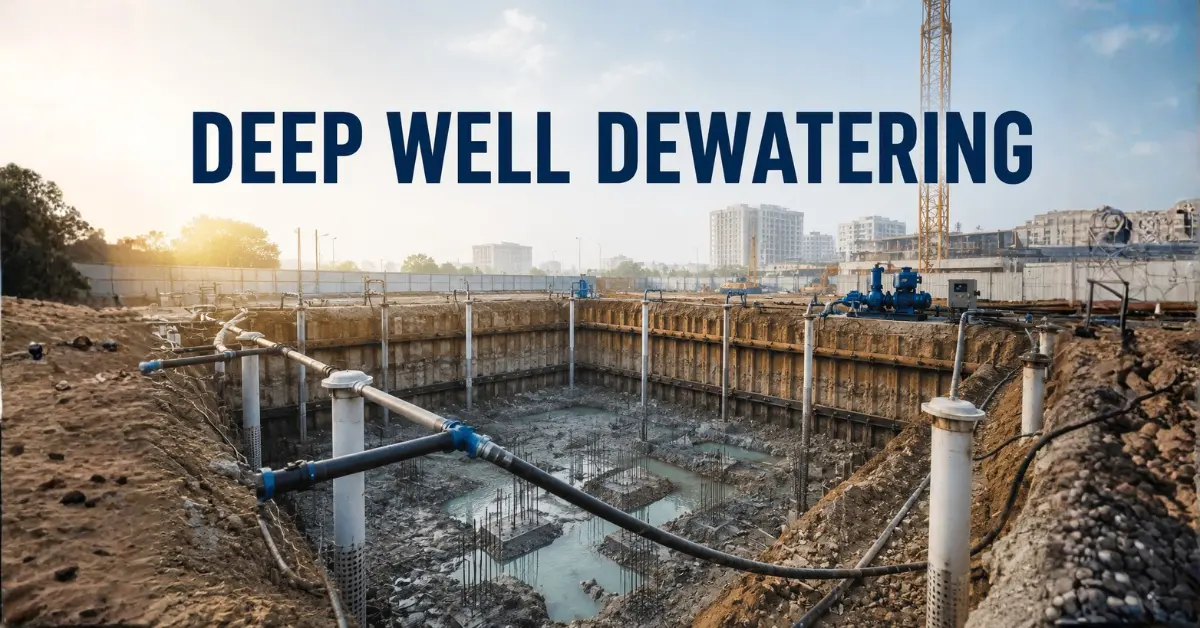
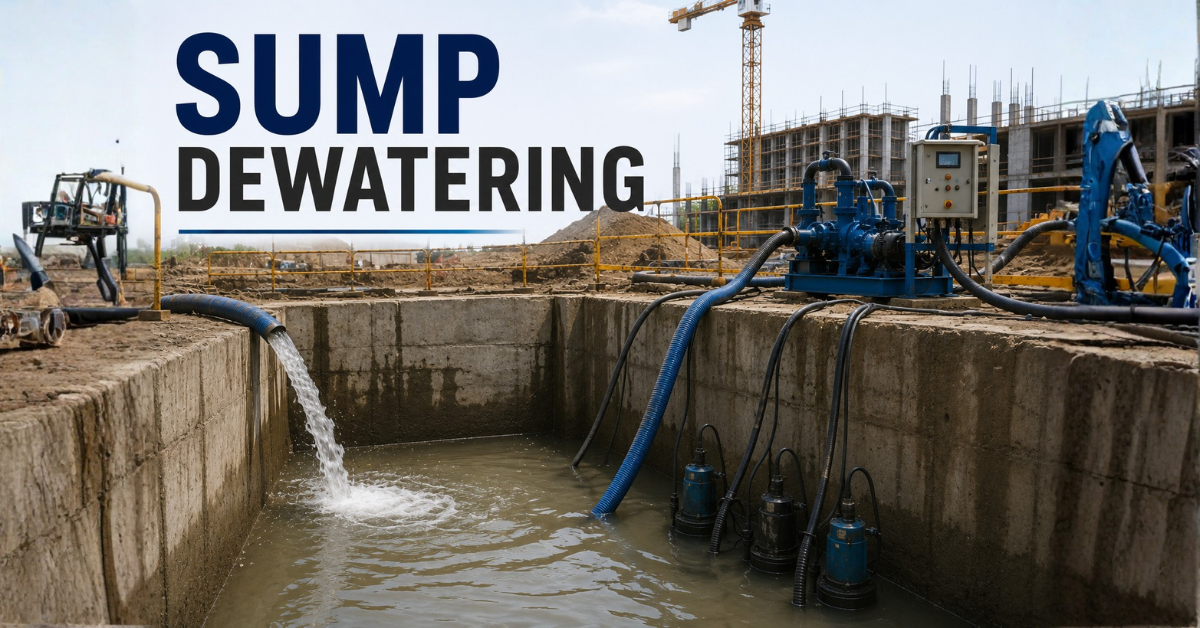
Excavation projects often encounter groundwater, rainwater, and surface runoff that can quickly accumulate within trenches, foundations, and construction excavations. Excess water can reduce soil stability, delay construction activities, create unsafe working conditions, and increase project costs. One of the most widely used and cost-effective methods for managing water in small to medium-sized excavations is sump dewatering.
Sump dewatering for excavation projects involves collecting water in designated pits or sumps and pumping it away from the work area. The method is simple, economical, and highly effective when groundwater inflows are relatively low and soil conditions are suitable.
This guide explains everything you need to know about sump dewatering for excavation projects, including how it works, system components, installation procedures, advantages, limitations, applications, and best practices.
What Is Sump Dewatering?
Sump dewatering is a groundwater and surface water removal method that uses collection pits, known as sumps, to gather water entering an excavation. Pumps are then used to remove the collected water and discharge it away from the site.
Unlike wellpoint or deep well systems, sump dewatering does not lower groundwater levels over a large area. Instead, it manages water after it enters the excavation.
Because of its simplicity and low installation cost, sump dewatering for excavation projects is commonly used for shallow excavations and temporary groundwater control.
How Sump Dewatering Works
The principle behind sump dewatering for excavation projects is straightforward.
As water enters the excavation through groundwater seepage, rainfall, or surface runoff, it is directed toward designated low points within the excavation.
The process typically follows these steps:
- Water enters the excavation.
- Drainage channels guide water toward collection points.
- Water accumulates inside sump pits.
- Pumps remove the collected water.
- Discharge pipes carry water away from the site.
- Dry working conditions are maintained throughout the excavation process.
The system operates continuously as long as water inflows occur.
Main Components of a Sump Dewatering System
A successful sump dewatering system consists of several key components.
Sump Pits
Sump pits are excavated collection points located at the lowest areas of the excavation.
Their purpose is to collect groundwater and surface water before pumping.
Drainage Channels
Drainage trenches or channels direct water toward the sump pits.
Proper channel design improves water collection efficiency.
Pumps
Pumps remove accumulated water from the sump.
Common pump types include:
- Centrifugal pumps
- Submersible pumps
- Trash pumps
- Electric pumps
- Diesel-powered pumps
Discharge Piping
Discharge pipes transport water away from the excavation to approved discharge locations.
Sediment Control Measures
Filters, sediment tanks, and settling basins may be installed to prevent excessive sediment discharge.
When Should Sump Dewatering Be Used?
Sump dewatering for excavation projects is most effective under specific site conditions.
It is commonly used when:
- Excavations are relatively shallow.
- Groundwater inflows are low to moderate.
- Soil conditions are stable.
- Temporary water removal is required.
- Project budgets are limited.
- Surface water management is necessary.
Because of its simplicity, sump dewatering is often the first option considered for smaller excavation projects.
Soil Conditions Suitable for Sump Dewatering
The effectiveness of sump dewatering depends heavily on soil characteristics.
Suitable Soils
Sump dewatering generally performs well in:
- Cohesive soils
- Clay soils
- Silty soils
- Stable mixed soils
These soils typically experience slower groundwater movement and lower inflow rates.
Less Suitable Soils
Sump dewatering may be less effective in:
- Coarse sand
- Gravel
- Highly permeable soils
These materials allow groundwater to flow rapidly into the excavation, often requiring more advanced dewatering methods.
Installation Process for Sump Dewatering
Implementing sump dewatering for excavation projects involves several steps.
Step 1: Site Assessment
Engineers evaluate:
- Groundwater conditions
- Soil characteristics
- Excavation depth
- Surface water sources
Step 2: Sump Location Selection
Sumps are placed at low points where water naturally collects.
Proper placement improves efficiency.
Step 3: Excavation of Sump Pits
Small pits are excavated below the main excavation level.
The size depends on expected water inflow rates.
Step 4: Installation of Drainage Channels
Channels or trenches are constructed to direct water toward the sump pits.
Step 5: Pump Installation
Appropriate pumps are installed inside the sump pits.
Step 6: System Operation
The pumps continuously remove water throughout the excavation period.
Step 7: Monitoring and Maintenance
Water levels, pump performance, and discharge conditions are monitored regularly.
Advantages of Sump Dewatering for Excavation Projects
There are several reasons why sump dewatering for excavation projects remains widely used.
Simple Installation
The system requires minimal equipment and can be installed quickly.
Low Initial Cost
Compared to wellpoint and deep well systems, sump dewatering is relatively inexpensive.
Easy Operation
The system is simple to operate and maintain.
Flexible Design
Sump locations can be adjusted as excavation progresses.
Effective Surface Water Control
The method handles rainfall and surface runoff effectively.
Limitations of Sump Dewatering
Despite its benefits, sump dewatering has several limitations.
Limited Groundwater Control
The method manages water after it enters the excavation rather than lowering the groundwater table.
Erosion Risks
Flowing water may erode excavation surfaces if not properly controlled.
Unsuitable for Deep Excavations
Large groundwater inflows can overwhelm sump systems.
Increased Maintenance
Sediment accumulation may require frequent cleaning.
Potential Excavation Instability
Poorly managed sump systems can contribute to localized soil softening.
Common Applications of Sump Dewatering for Excavation Projects
Sump dewatering for excavation projects is used across a variety of construction activities.
Foundation Excavations
Shallow building foundations often rely on sump dewatering.
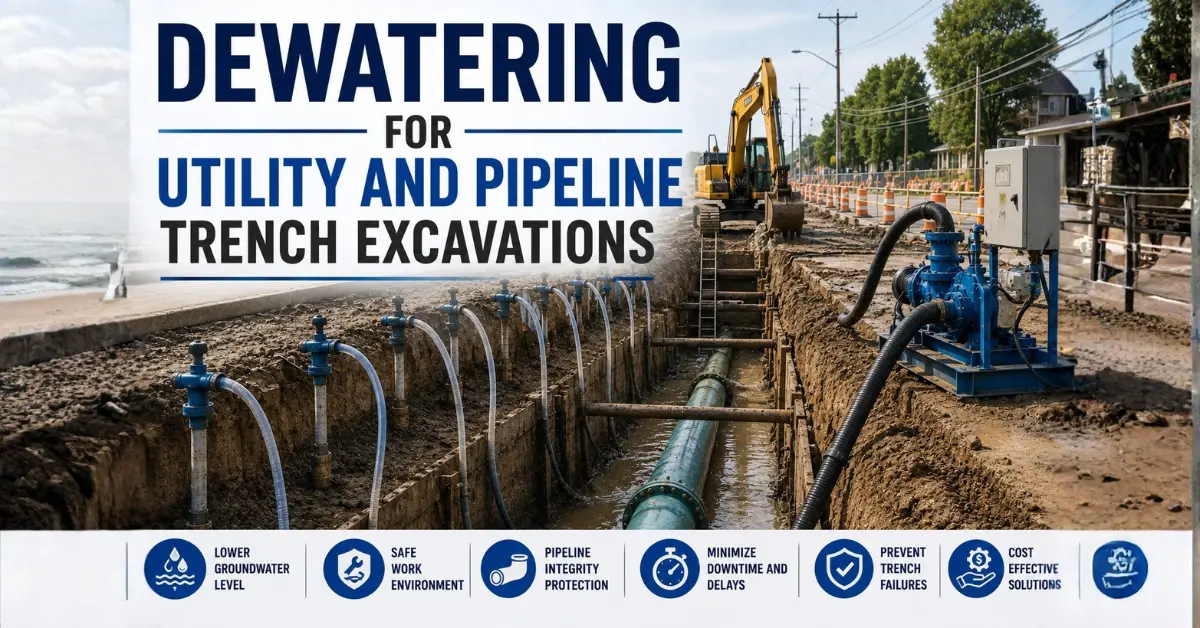
Utility Trenches
Water control is frequently required during pipeline and utility installation.
Road Construction
Temporary groundwater and surface water removal support roadway excavation activities.
Drainage Infrastructure Projects
Stormwater and drainage system installations commonly use sump systems.
Small Civil Engineering Projects
Many short-term excavations utilize sump dewatering because of its simplicity and low cost.
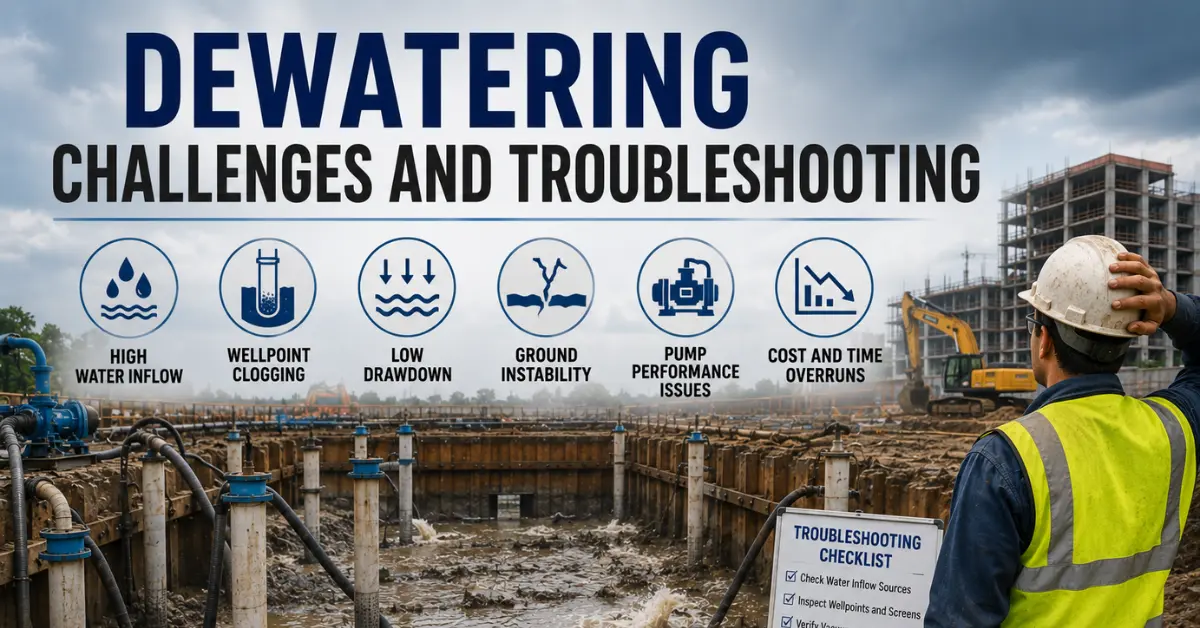
Common Problems and Troubleshooting
Pump Failure
Pump breakdowns can lead to rapid flooding.
Backup pumps should always be available.
Sediment Buildup
Sediment accumulation can reduce sump capacity and pump efficiency.
Regular cleaning is essential.
Blocked Drainage Channels
Channels should be inspected regularly to maintain water flow.
Excessive Groundwater Inflow
If inflows exceed system capacity, alternative dewatering methods may be required.
Discharge Issues
Water discharge locations must comply with environmental regulations and project requirements.
Best Practices for Successful Sump Dewatering
To maximize performance, contractors should follow established best practices.
Conduct Site Investigations
Understanding groundwater conditions improves system design.
Position Sumps Correctly
Locate sumps at natural collection points.
Select Appropriate Pumps
Pump capacity should match expected inflow rates.
Maintain Drainage Paths
Keep channels free of debris and obstructions.
Monitor System Performance
Regular inspections help identify issues early.
Prepare Backup Equipment
Emergency pumps reduce the risk of flooding.
Implement Sediment Control
Proper filtration and settling measures improve environmental compliance.
Environmental Considerations
Like all dewatering activities, sump dewatering for excavation projects can have environmental impacts.
Potential concerns include:
- Sediment discharge
- Erosion
- Water quality impacts
- Localized groundwater changes
- Surface runoff management
Proper discharge controls and environmental monitoring help minimize these risks.
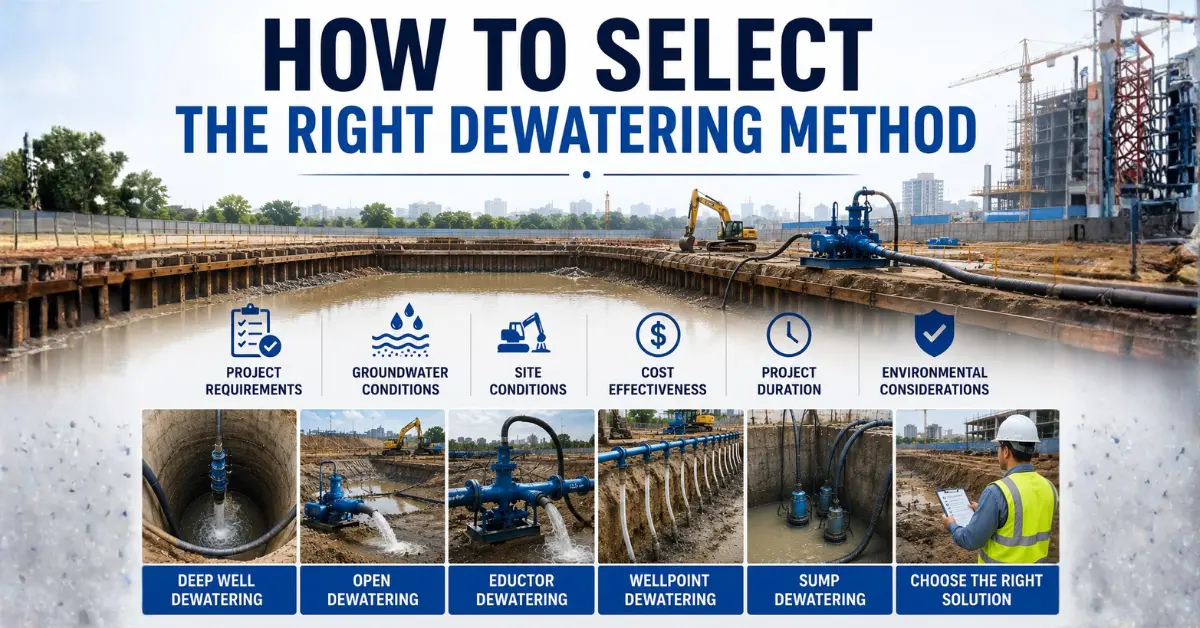
Sump Dewatering vs Other Dewatering Methods
| Feature | Sump Dewatering | Wellpoint Dewatering | Deep Well Dewatering |
| Installation Cost | Low | Medium | High |
| Excavation Depth | Shallow | Shallow to Medium | Deep |
| Groundwater Control | Limited | Good | Excellent |
| Installation Complexity | Low | Medium | High |
| Suitable Project Size | Small | Medium | Large |
This comparison highlights why sump dewatering is often chosen for smaller excavation projects with manageable groundwater conditions.
Frequently Asked Questions
What is sump dewatering?
Sump dewatering is a method of collecting water in pits or sumps and pumping it away from an excavation.
When should sump dewatering be used?
It is most suitable for shallow excavations, low groundwater inflows, and temporary water removal applications.
Is sump dewatering expensive?
No. Sump dewatering is generally one of the most cost-effective dewatering methods available.
Can sump dewatering lower the groundwater table?
Not significantly. It primarily removes water after it enters the excavation.
What type of pump is used for sump dewatering?
Submersible pumps, centrifugal pumps, and trash pumps are commonly used.
Conclusion
Sump dewatering for excavation projects is one of the simplest and most economical methods for managing groundwater and surface water during excavation activities. By collecting water in sump pits and pumping it away from the work area, contractors can maintain safer and more productive construction conditions.
While sump dewatering may not provide the extensive groundwater control offered by wellpoint or deep well systems, it remains highly effective for shallow excavations, utility trenches, foundation work, and temporary water management applications. With proper planning, installation, monitoring, and maintenance, sump dewatering can provide reliable water control and support successful project completion.