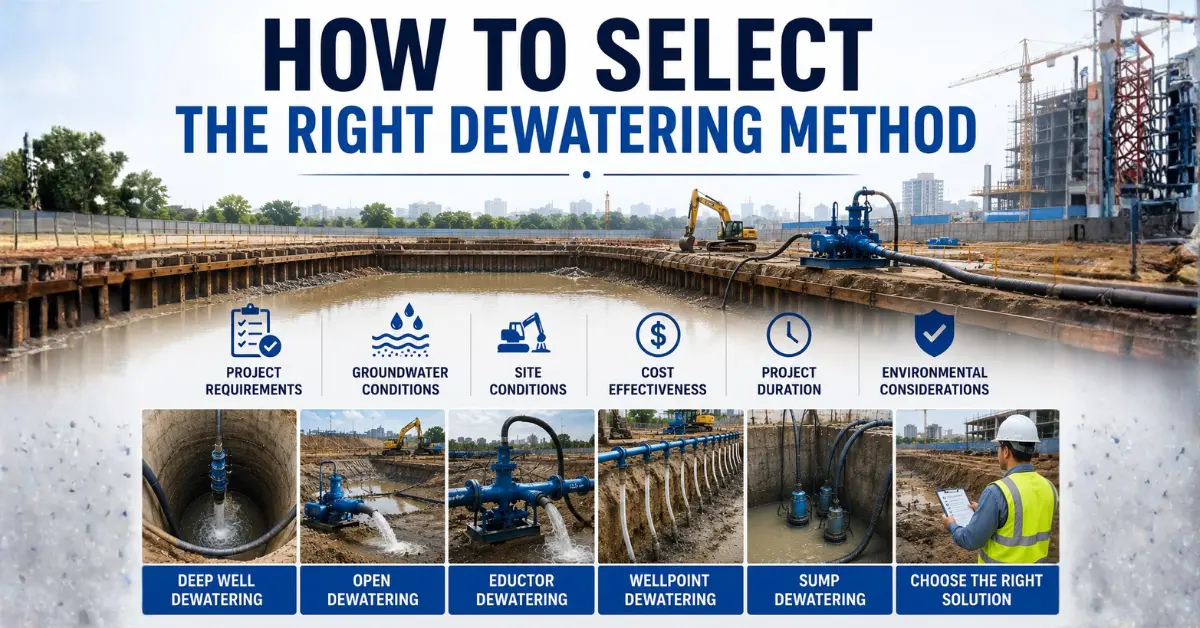
Groundwater control is one of the most important aspects of successful excavation and construction projects. Whether constructing a basement, installing underground utilities, building roads, or developing major infrastructure, selecting the appropriate dewatering solution can significantly impact project safety, productivity, cost, and overall success.
However, there is no single dewatering system that works for every project. Soil conditions, groundwater levels, excavation depth, project duration, environmental requirements, and budget constraints all influence the selection process. Understanding how to select the right dewatering method helps engineers, contractors, and project owners avoid costly mistakes and ensure effective groundwater control.
This guide explains how to select the right dewatering method, the key factors involved in decision-making, the strengths and limitations of different dewatering systems, and best practices for achieving successful project outcomes.
Why Choosing the Right Dewatering Method Matters
Groundwater can create numerous challenges during excavation and construction activities.
Without effective groundwater control, projects may experience:
- Flooded excavations
- Soil instability
- Trench collapses
- Construction delays
- Equipment damage
- Increased project costs
- Safety hazards
Understanding how to select the right dewatering method ensures that groundwater is controlled efficiently while minimizing risks and unnecessary expenses.
Proper dewatering selection can:
- Improve worker safety
- Increase excavation stability
- Reduce project delays
- Improve construction quality
- Lower long-term costs
- Support environmental compliance
Factors That Influence Dewatering Method Selection
Several site-specific factors must be evaluated when determining the most suitable groundwater control solution.
Groundwater Conditions
Groundwater characteristics are among the most important considerations when deciding how to select the right dewatering method.
Engineers should evaluate:
- Groundwater table depth
- Groundwater inflow rates
- Seasonal groundwater fluctuations
- Aquifer properties
- Recharge rates
Sites with high groundwater inflows generally require more robust dewatering systems than sites with limited groundwater movement.
Soil Type and Permeability
Soil conditions directly influence groundwater flow and dewatering performance.
Sandy Soils
Sand allows groundwater to move freely.
Common methods include:
- Wellpoint systems
- Deep well systems
Gravel Soils
Gravel formations often produce high groundwater inflows.
Deep well systems are frequently preferred.
Clay Soils
Groundwater movement is slower in clay.
Suitable methods may include:
- Eductor systems
- Sump dewatering
Mixed Soil Conditions
Projects involving multiple soil layers may require customized groundwater control solutions.
Understanding soil permeability is essential when learning how to select the right dewatering method.
Excavation Depth
Excavation depth is a major factor in dewatering system selection.
Shallow Excavations
Typically less than 5–6 meters deep.
Suitable methods include:
- Open dewatering
- Sump pumping
- Wellpoint systems
Medium-Depth Excavations
May require:
- Wellpoint systems
- Combination systems
Deep Excavations
Often require:
- Deep well systems
- Eductor systems
The deeper the excavation, the greater the groundwater drawdown required.
Excavation Size and Area
The size of the excavation affects the overall dewatering strategy.
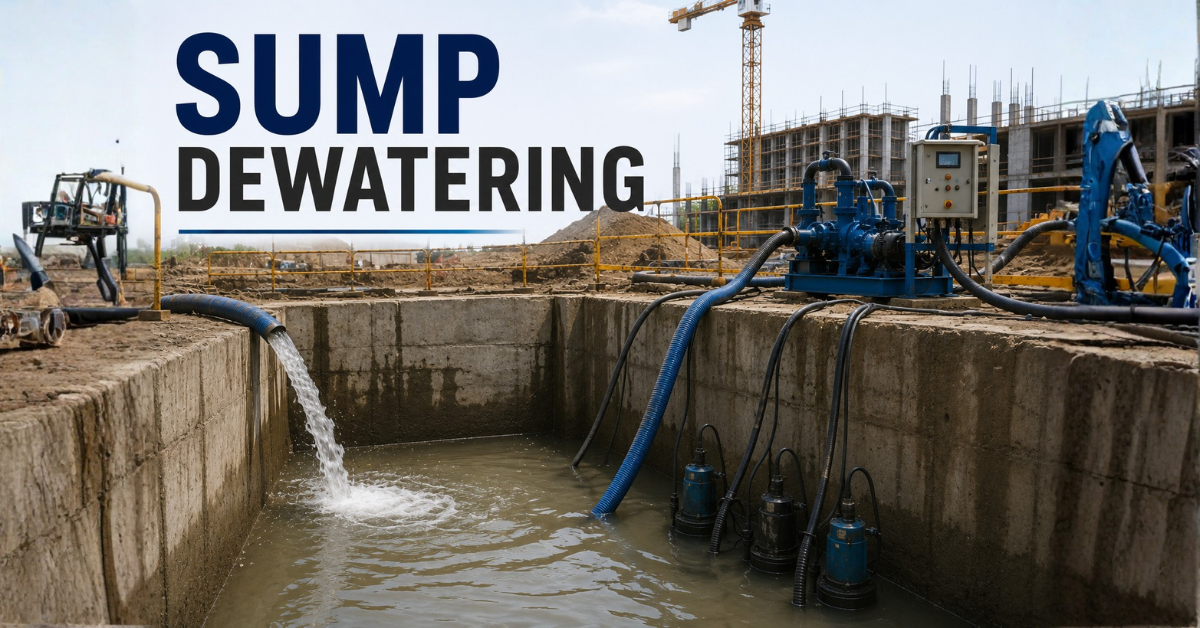
Small Excavations
May be managed with simple sump systems.
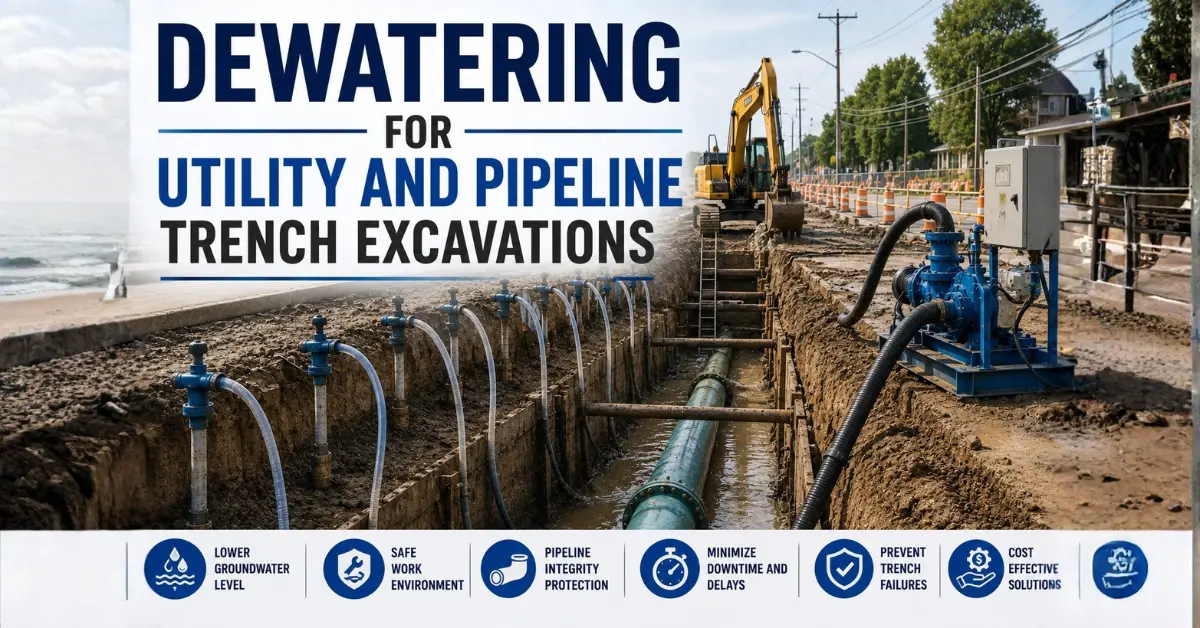
Long Utility Trenches
Often benefit from wellpoint systems.
Large Construction Sites
Typically require deep well systems or multiple dewatering zones.
Evaluating excavation dimensions is critical when determining how to select the right dewatering method.
Project Duration
Project duration significantly influences dewatering system economics.
Short-Term Projects
Temporary systems such as:
- Sump pumping
- Open dewatering
may be sufficient.
Long-Term Projects
Extended construction schedules often justify:
- Deep wells
- Permanent groundwater control systems
Long-term reliability becomes increasingly important for projects lasting several months.
Environmental Considerations
Environmental requirements can influence system selection.
Factors include:
- Water discharge regulations
- Sediment control requirements
- Groundwater protection measures
- Nearby water bodies
- Wetland protection
Environmental compliance should always be considered when evaluating how to select the right dewatering method.
Nearby Structures and Infrastructure
Groundwater lowering can affect surrounding properties.
Engineers should assess:
- Adjacent buildings
- Roads
- Utilities
- Retaining structures
- Existing foundations
Excessive groundwater drawdown can lead to settlement and structural damage if not properly managed.
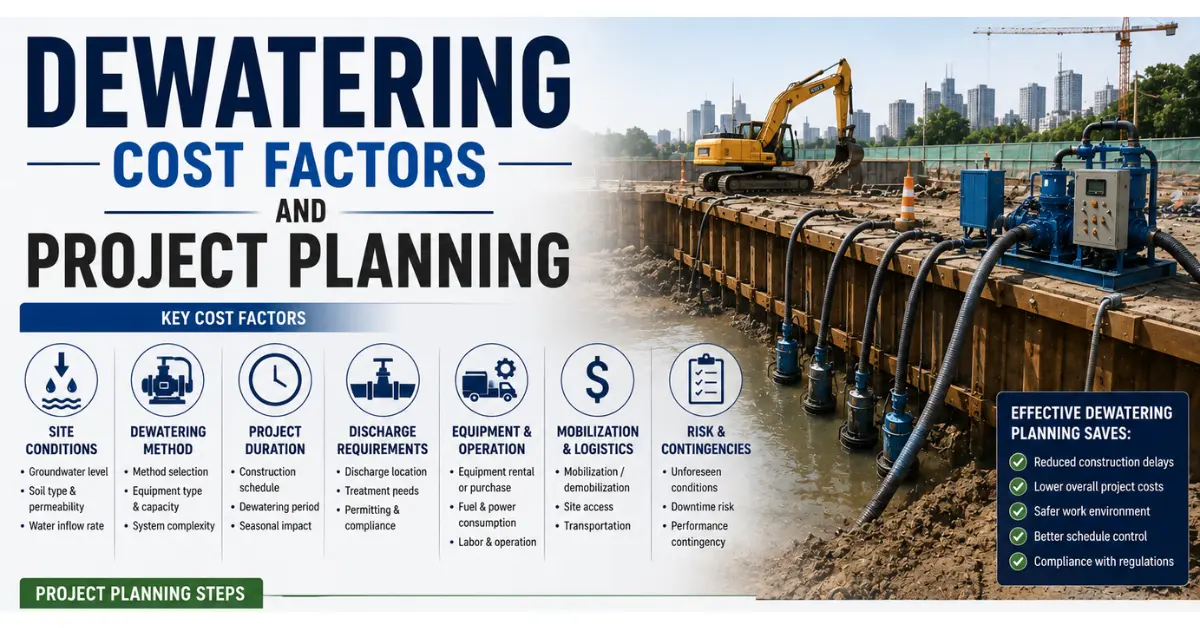
Budget Constraints
Project budgets often influence dewatering decisions.
However, selecting the cheapest option is not always the most cost-effective solution.
A poorly designed system can result in:
- Flooding
- Delays
- Rework
- Increased labor costs
Understanding total lifecycle costs is essential when considering how to select the right dewatering method.
Common Dewatering Methods and When to Use Them
Understanding the capabilities of each method is a key step in learning how to select the right dewatering method.
Open Dewatering
Open dewatering uses ditches, channels, and pumps to remove water.
Best For
- Surface water control
- Shallow excavations
- Temporary projects
Advantages
- Low cost
- Simple installation
- Easy operation
Limitations
- Limited groundwater control
- Potential erosion issues
Sump Dewatering
Sump Dewatering Water is collected in pits or sumps and pumped away.
Best For
- Small excavations
- Temporary groundwater management
Advantages
- Cost-effective
- Flexible
- Easy to maintain
Limitations
- Not suitable for high groundwater inflows
Wellpoint Dewatering Systems
Wellpoints use closely spaced small-diameter wells connected to a vacuum pump.
Best For
- Sandy soils
- Utility trenches
- Basement excavations
Advantages
- Reliable groundwater control
- Relatively economical
Limitations
- Limited drawdown depth
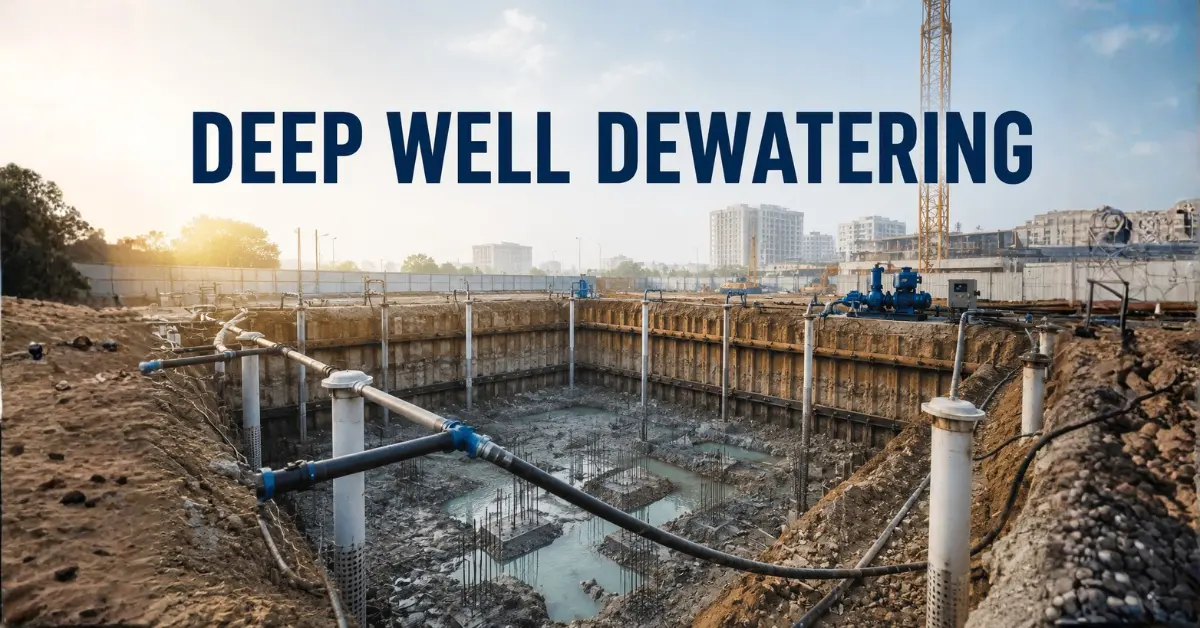
Deep Well Dewatering Systems
Deep wells use drilled boreholes and submersible pumps.
Best For
- Deep excavations
- Large construction sites
- High groundwater conditions
Advantages
- High pumping capacity
- Significant groundwater lowering
Limitations
- Higher installation costs
Eductor Dewatering Systems
Eductor systems use pressure-driven vacuum principles.
Best For
- Clay and silt soils
- Low-permeability formations
Advantages
- Effective where conventional wells are less efficient
Limitations
- Higher complexity
- Greater installation costs
Simple Dewatering Selection Guide
| Site Condition | Recommended Method |
| Shallow excavation with surface water | Open Dewatering |
| Small excavation with limited groundwater | Sump Dewatering |
| Sandy soils and shallow groundwater | Wellpoint System |
| Deep excavation with high groundwater | Deep Well System |
| Clay-rich soils | Eductor System |
| Long utility trenches | Wellpoint System |
| Large infrastructure projects | Deep Well System |
This comparison provides a useful starting point when evaluating how to select the right dewatering method.
Step-by-Step Process for Selecting a Dewatering Method
Step 1: Conduct a Site Investigation
Gather information about:
- Soil conditions
- Groundwater levels
- Geological formations
- Site constraints
Accurate data forms the foundation of successful groundwater control.
Step 2: Define Project Requirements
Determine:
- Excavation depth
- Excavation size
- Construction schedule
- Performance requirements
Step 3: Evaluate Groundwater Risks
Assess:
- Groundwater inflow rates
- Potential flooding risks
- Nearby structures
Step 4: Compare Available Methods
Review:
- Technical suitability
- Cost implications
- Installation requirements
- Environmental impacts
Step 5: Develop a Preliminary Design
Estimate:
- Number of wells
- Pump capacities
- Monitoring requirements
Step 6: Implement Monitoring Plans
Continuous monitoring ensures that the selected system performs as intended.
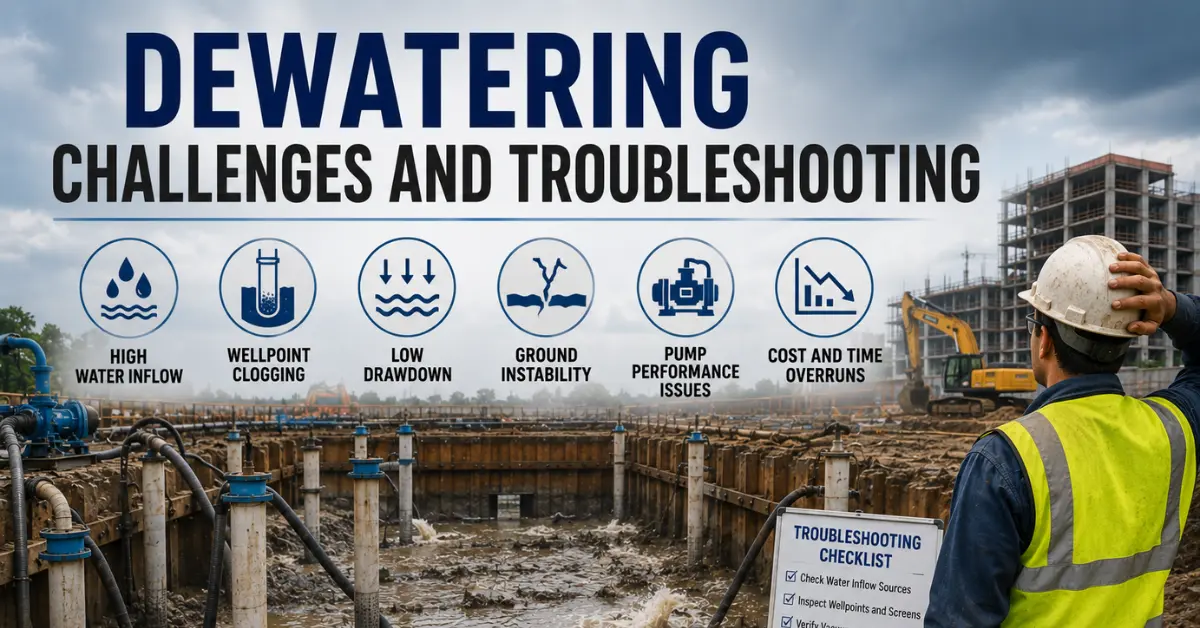
Common Mistakes When Selecting a Dewatering Method
Many groundwater control problems result from poor planning.
Common mistakes include:
Inadequate Site Investigation
Poor data often leads to ineffective system design.
Choosing Based Only on Cost
The cheapest option may not provide adequate performance.
Ignoring Soil Conditions
Different soils require different approaches.
Underestimating Groundwater Inflows
Unexpected inflows can overwhelm poorly designed systems.
Failing to Consider Environmental Requirements
Regulatory issues can create costly delays.
Future Trends in Dewatering Selection
Technological advancements are improving groundwater management decision-making.
Emerging trends include:
- Advanced groundwater modeling
- Real-time monitoring systems
- Smart pump controls
- Automated performance optimization
- Digital site assessments
These technologies help engineers make more accurate dewatering decisions.
Frequently Asked Questions
What is the most important factor when selecting a dewatering method?
Groundwater conditions and soil permeability are usually the most important factors because they determine how water moves through the site.
Which dewatering method is best for deep excavations?
Deep well systems are typically the preferred solution for deep excavations with significant groundwater inflows.
Can one project use multiple dewatering methods?
Yes. Many projects combine methods to address varying site conditions.
Is wellpoint dewatering suitable for all soil types?
No. Wellpoint systems perform best in permeable soils such as sand and silt.
Why is a site investigation important?
A site investigation provides the information necessary to design an effective groundwater control system and avoid costly mistakes.
Conclusion
Understanding how to select the right dewatering method is essential for achieving safe, efficient, and cost-effective groundwater control. Every project presents unique challenges, and the most suitable solution depends on groundwater conditions, soil characteristics, excavation depth, project duration, environmental requirements, and budget considerations.
Whether using open dewatering, sump pumping, wellpoint systems, deep wells, or eductor systems, successful groundwater management begins with accurate site investigations and careful planning. By following a structured evaluation process, project teams can confidently determine how to select the right dewatering method and implement solutions that support construction success while minimizing risks and costs.
As excavation and infrastructure projects continue to become more complex, understanding how to select the right dewatering method will remain a critical skill for engineers, contractors, and project owners alike.