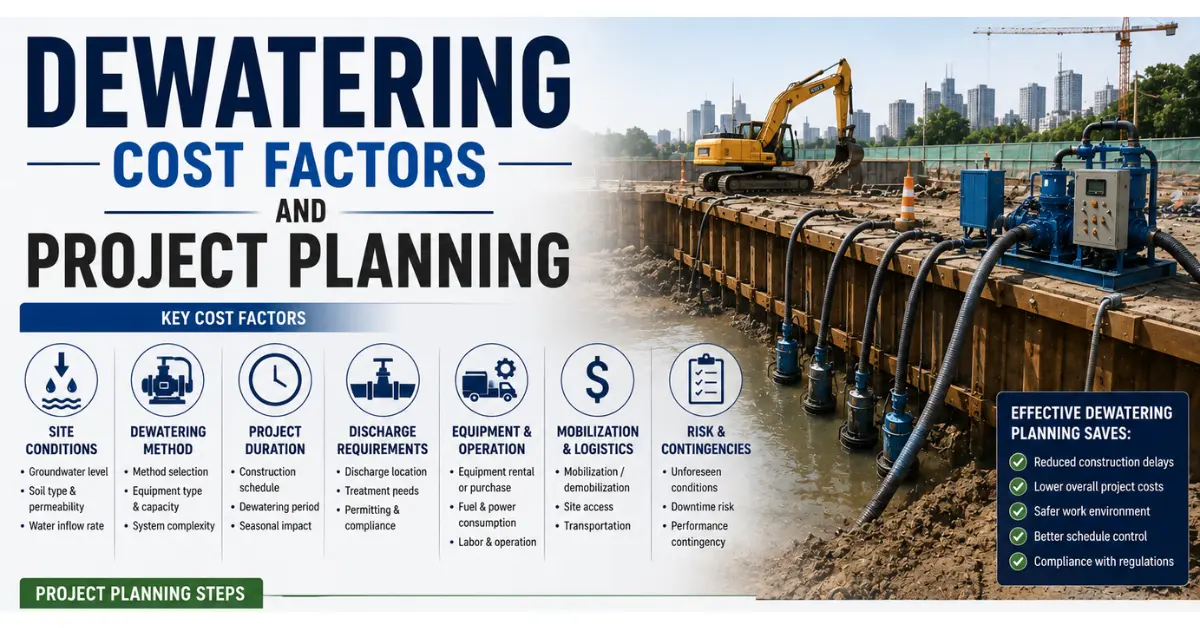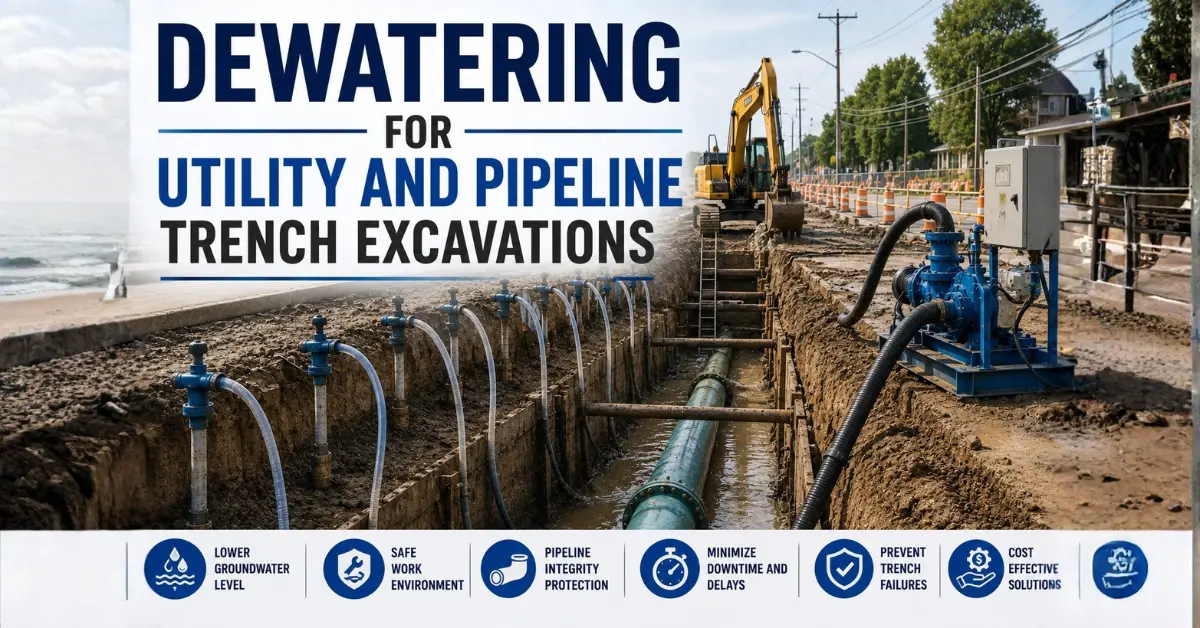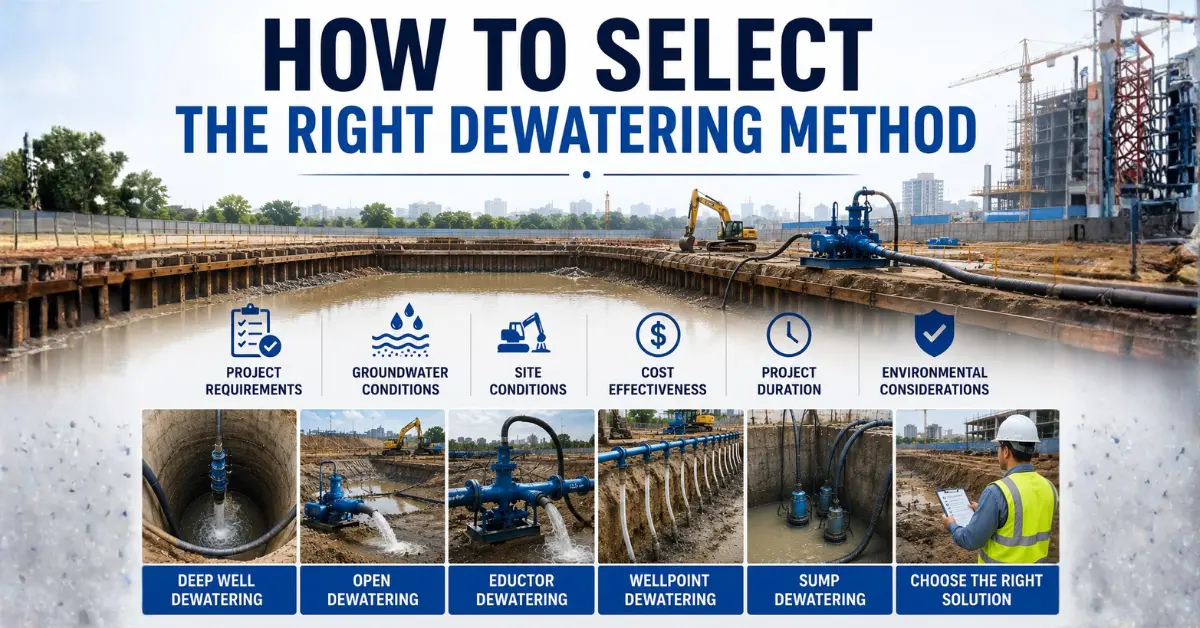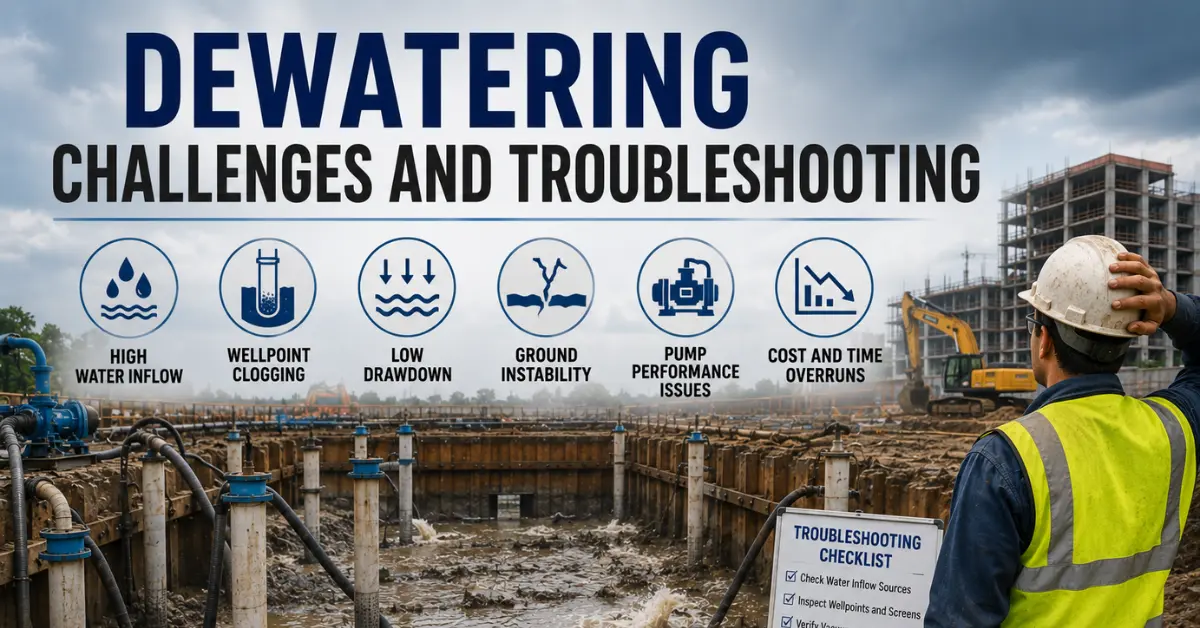
Water management is one of the most important aspects of excavation and construction projects. Groundwater seepage, rainfall, surface runoff, and stormwater can quickly accumulate within excavations, making construction activities difficult and unsafe. Without proper water control, projects may experience delays, reduced soil stability, equipment damage, and increased costs.
Among the various groundwater control techniques available, open dewatering methods are one of the simplest and most commonly used solutions. These methods remove water after it enters an excavation using drainage channels, ditches, trenches, sumps, and pumps. Due to their low cost and ease of installation, open dewatering methods are widely used in construction, utility installation, road projects, and temporary excavation works.
This guide explains everything you need to know about open dewatering methods, including how they work, their advantages, limitations, risks, common applications, and best practices.
What Are Open Dewatering Methods?
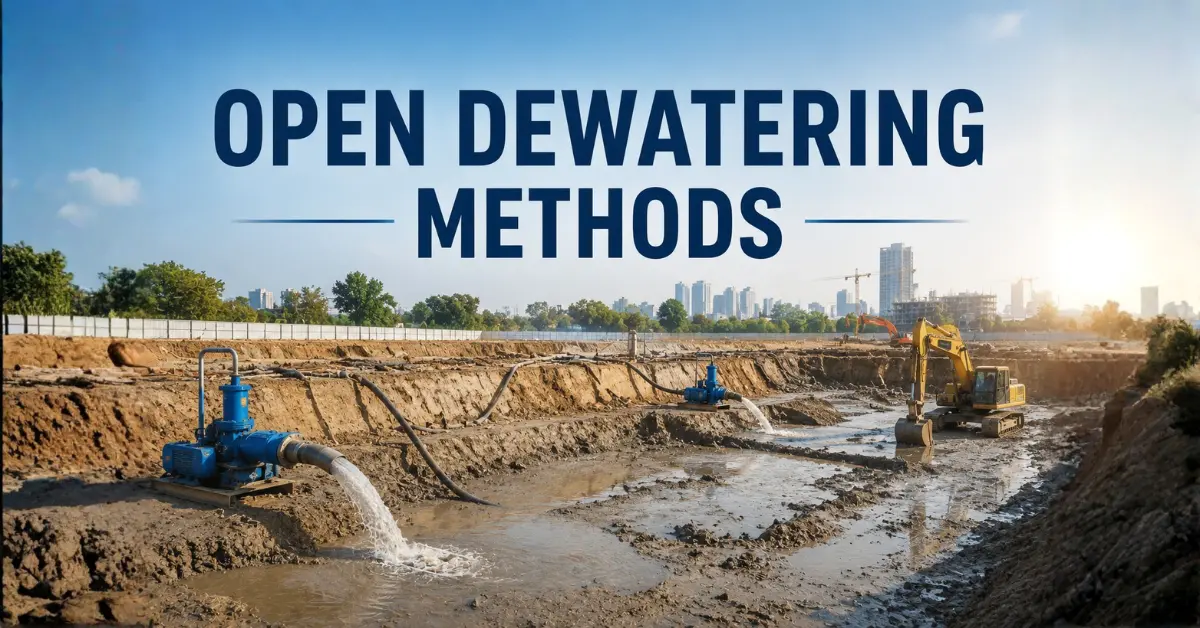
Open dewatering methods are water removal techniques that collect groundwater and surface water after it enters an excavation and then pump it away from the work area.
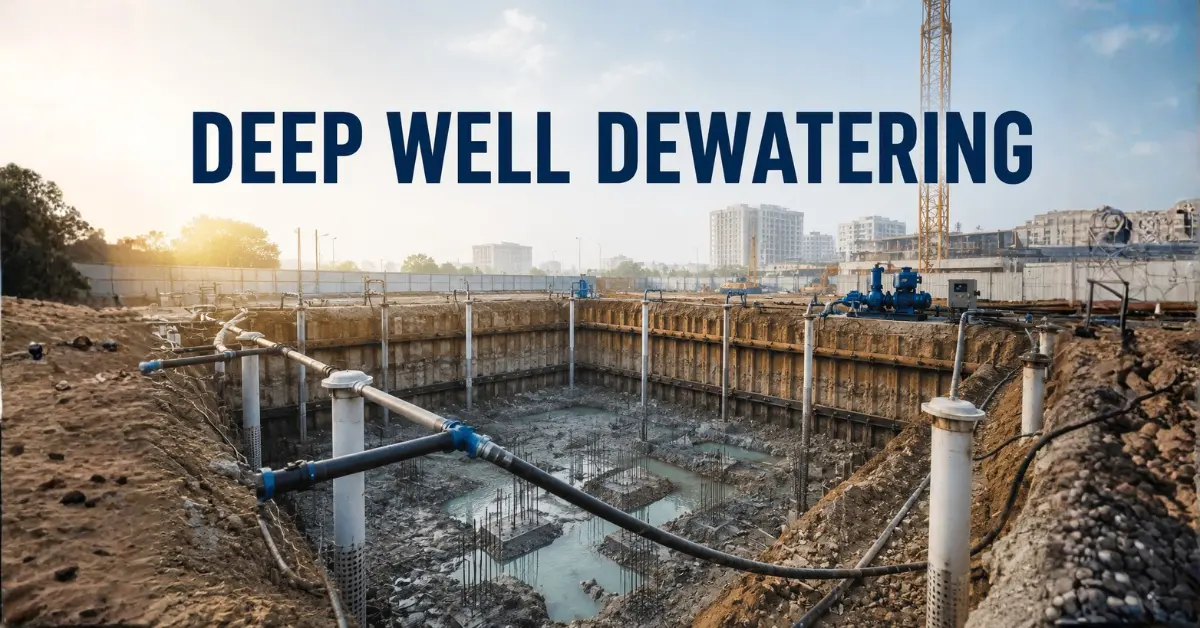
Unlike wellpoint dewatering or deep well dewatering systems, which lower groundwater levels before water reaches the excavation, open dewatering methods manage water directly within the excavation itself.
The primary objective of open dewatering is to:
- Keep excavation areas dry
- Improve site safety
- Maintain soil stability
- Allow uninterrupted construction activities
- Protect equipment and materials
Because these systems are relatively simple, they are often the first dewatering option considered for projects with manageable groundwater conditions.
How Open Dewatering Methods Work
The operating principle behind open dewatering methods is straightforward.
Water entering the excavation through groundwater seepage, rainfall, or runoff is directed toward designated collection points. Pumps then remove the accumulated water and discharge it away from the site.
A typical process includes:
- Water enters the excavation.
- Drainage channels or trenches collect the water.
- Water flows toward sump pits or collection points.
- Pumps remove the collected water.
- Water is discharged to an approved location.
- Continuous pumping maintains dry working conditions.
The effectiveness of open dewatering methods depends heavily on proper drainage design and pump capacity.
Main Components of Open Dewatering Systems
Several components work together to ensure effective water removal.
Drainage Ditches
Drainage ditches collect water from across the excavation and direct it toward collection points.
They are typically installed around the perimeter of the excavation.
Drainage Trenches
Trenches intercept groundwater seepage and help prevent water accumulation throughout the work area.
Sump Pits
Sumps are low points where water collects before being pumped away.
They serve as the central collection area within many open dewatering systems.
Pumps
Pumps are used to remove collected water.
Common pump types include:
- Submersible pumps
- Centrifugal pumps
- Trash pumps
- Diesel-powered pumps
- Electric pumps
Discharge Systems
Discharge pipes transport water away from the excavation to approved discharge locations.
Sediment Control Equipment
Sediment basins, filtration systems, and settling tanks may be used to improve discharge water quality.
Types of Open Dewatering Methods
Several variations of open dewatering methods are used depending on project conditions.
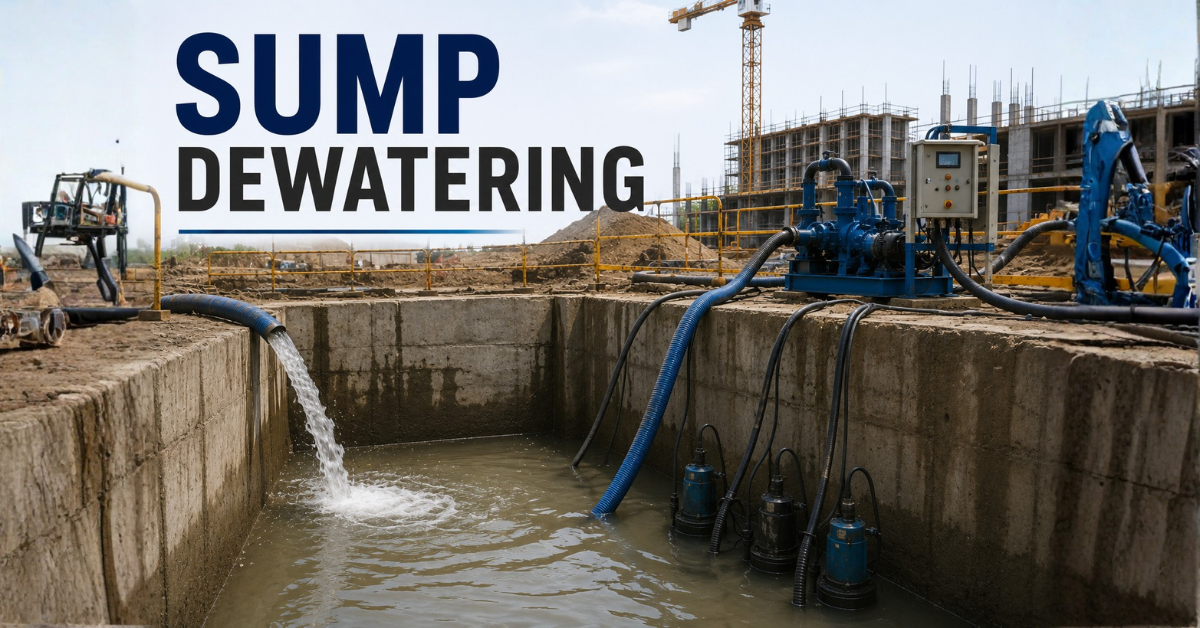
Sump Dewatering
Sump dewatering is the most common form of open dewatering.
Water is collected in excavated pits and pumped away continuously.
Typical Applications
- Foundation excavations
- Utility trenches
- Small construction projects
Ditch Dewatering
Ditches are used to collect and transport water toward sump locations.
Typical Applications
- Road construction
- Large excavation sites
- Temporary drainage systems
Trench Dewatering
Drainage trenches intercept groundwater before it spreads throughout the excavation.
Typical Applications
- Utility installation
- Pipeline construction
- Drainage infrastructure projects
Surface Drainage Systems
Surface drainage controls rainwater and runoff using grading, channels, and temporary drainage structures.
Typical Applications
- Site development
- Highway construction
- Land development projects
Benefits of Open Dewatering Methods
There are several reasons why open dewatering methods remain widely used throughout the construction industry.
Low Installation Cost
One of the biggest advantages of open dewatering methods is affordability.
The required equipment is generally less expensive than wellpoint or deep well systems.
Simple Design
Open dewatering systems are relatively easy to design and install.
Most contractors can implement them without specialized drilling equipment.
Fast Installation
Construction crews can establish open dewatering systems quickly, allowing excavation work to begin sooner.
Easy Operation
Daily operation typically involves monitoring pumps and maintaining drainage channels.
Flexible Configuration
Channels and collection points can be adjusted as excavation work progresses.
Effective Surface Water Management
Open dewatering methods perform particularly well when dealing with rainfall and stormwater runoff.
Risks Associated with Open Dewatering Methods
Despite their advantages, open dewatering methods involve several risks that must be managed.
Soil Erosion
Flowing water can erode excavation walls, slopes, and drainage channels.
Uncontrolled erosion may compromise site stability.
Excavation Instability
Water movement through excavation areas can weaken soil strength and increase the risk of localized failures.
Pump Failure
If pumps stop operating, water can quickly accumulate and flood the excavation.
Safety Hazards
Standing water creates slip, trip, and fall hazards for workers.
Sediment Transport
Water movement may carry soil particles into discharge systems and nearby water bodies.
Limitations of Open Dewatering Methods
Understanding the limitations of open dewatering methods is critical when selecting a dewatering solution.
Limited Groundwater Control
Open dewatering removes water after it enters the excavation rather than lowering groundwater levels beforehand.
Unsuitable for Deep Excavations
Deep excavations often require more advanced dewatering systems capable of significant groundwater drawdown.
Reduced Effectiveness in Permeable Soils
Coarse sands and gravels can allow large volumes of groundwater to enter excavations rapidly.
High Maintenance Requirements
Drainage channels and sumps require regular cleaning and inspection.
Environmental Concerns
Improper discharge can create environmental compliance issues.
Soil Conditions Suitable for Open Dewatering
The success of open dewatering methods depends heavily on soil characteristics.
Suitable Soils
Open dewatering generally performs well in:
- Clay soils
- Silty clay
- Mixed cohesive soils
- Stable compacted materials
These soils typically limit groundwater flow.
Less Suitable Soils
Open dewatering is less effective in:
- Gravel
- Coarse sand
- Highly permeable soils
Such conditions often require wellpoint or deep well systems.
Applications of Open Dewatering Methods
Open dewatering methods are used in a wide range of projects.
Foundation Excavations
Small and medium-sized building foundations often use open dewatering systems.
Utility and Pipeline Installations
Temporary groundwater and surface water control are frequently required during trench excavations.
Road Construction
Drainage channels and sump systems help maintain stable working conditions.
Stormwater Infrastructure
Drainage system construction often relies on open dewatering.
Land Development Projects
Site preparation and grading activities commonly use temporary open dewatering systems.
Open Dewatering vs Wellpoint Dewatering
| Feature | Open Dewatering | Wellpoint Dewatering |
| Installation Cost | Low | Medium |
| Groundwater Control | Limited | Good |
| Excavation Depth | Shallow | Shallow to Medium |
| Soil Suitability | Stable Soils | Sand and Silt |
| Complexity | Low | Medium |
Wellpoint systems provide greater groundwater control but require more specialized equipment.
Open Dewatering vs Deep Well Dewatering
| Feature | Open Dewatering | Deep Well Dewatering |
| Installation Cost | Low | High |
| Groundwater Drawdown | Limited | Excellent |
| Excavation Depth | Shallow | Deep |
| Equipment Requirements | Minimal | Extensive |
| Suitable Project Size | Small to Medium | Large |
Deep well systems are generally preferred for large-scale projects with significant groundwater challenges.
Best Practices for Successful Open Dewatering
To maximize the effectiveness of open dewatering methods, contractors should follow proven best practices.
Conduct Site Investigations
Understanding groundwater conditions helps determine whether open dewatering is appropriate.
Design Effective Drainage Paths
Proper grading ensures water flows efficiently toward collection points.
Use Adequately Sized Pumps
Pump capacity should exceed expected inflow rates.
Inspect Systems Regularly
Routine inspections help identify blockages and maintenance needs.
Control Sediment
Install filtration or settling measures when required.
Maintain Backup Equipment
Backup pumps help prevent flooding during equipment failures.
Monitor Weather Conditions
Heavy rainfall can significantly affect system performance.
Environmental Considerations
Like all dewatering activities, open dewatering methods can impact the environment if not properly managed.
Potential concerns include:
- Sediment discharge
- Water quality impacts
- Erosion
- Surface runoff
- Effects on nearby waterways
Proper discharge controls, sediment management, and environmental monitoring help reduce these impacts.
Frequently Asked Questions
What are open dewatering methods?
Open dewatering methods remove groundwater and surface water after it enters an excavation using ditches, trenches, sumps, and pumps.
When should open dewatering be used?
Open dewatering is best suited for shallow excavations, low groundwater inflows, and temporary water management applications.
What is the main advantage of open dewatering?
The primary advantage is its low cost and simple installation.
Can open dewatering lower the groundwater table?
Not significantly. Open dewatering mainly removes water after it enters the excavation.
What are the main risks of open dewatering methods?
Common risks include erosion, excavation instability, sediment transport, flooding, and pump failures.
Conclusion
Open dewatering methods are among the simplest and most cost-effective solutions for managing groundwater, rainfall, and surface water during excavation projects. Their low installation cost, straightforward operation, and flexibility make them a popular choice for foundation excavations, utility trenches, road construction, and temporary drainage applications.
However, open dewatering methods also have limitations. They provide limited groundwater control, may increase erosion risks, and are generally unsuitable for deep excavations or highly permeable soil conditions. Proper planning, regular maintenance, environmental management, and ongoing monitoring are essential for successful implementation.
When used under the right site conditions, open dewatering methods provide reliable water management, improved site safety, and efficient project execution.