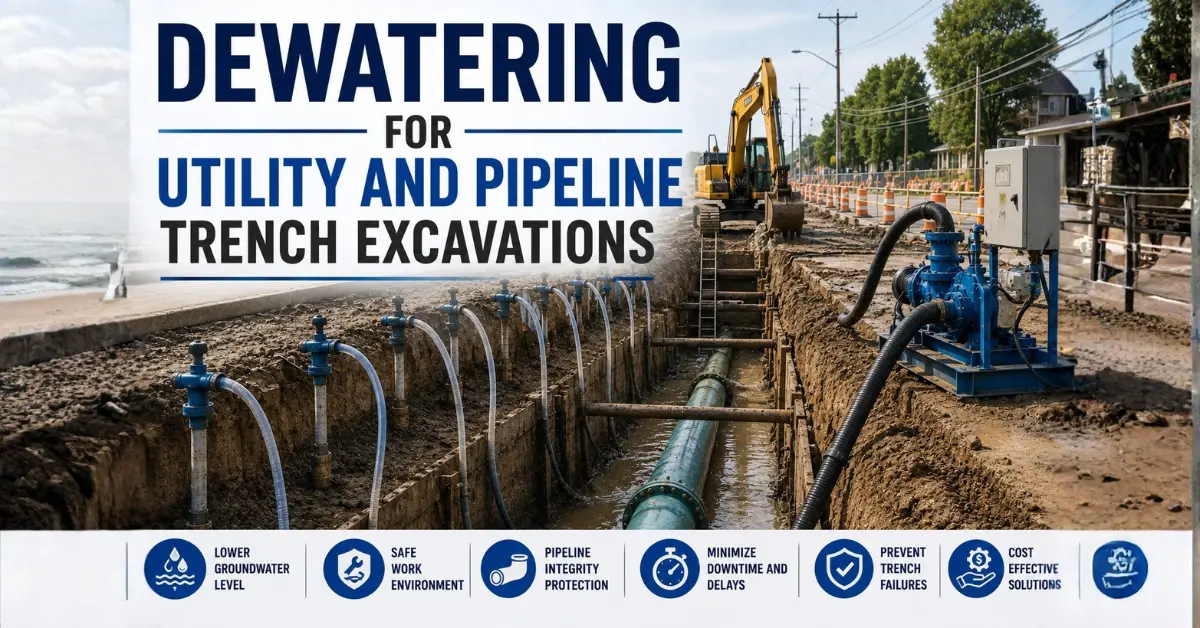
Utility and pipeline installations are essential components of modern infrastructure projects. Water supply networks, sewer systems, stormwater drainage lines, gas pipelines, electrical conduits, and telecommunications infrastructure often require extensive trench excavations. However, when these excavations encounter groundwater or surface water, construction activities can become significantly more challenging.
Groundwater entering a trench can reduce soil stability, increase the risk of trench collapse, delay installation work, and create unsafe conditions for workers. This is why dewatering for utility and pipeline trench excavations is a critical part of many underground construction projects.
Effective dewatering for utility and pipeline trench excavations helps maintain dry working conditions, improve trench stability, protect installed utilities, and ensure construction activities proceed safely and efficiently. The most appropriate dewatering solution depends on factors such as groundwater conditions, trench depth, soil type, and project duration.
This guide explains everything you need to know about dewatering for utility and pipeline trench excavations, including common dewatering methods, design considerations, challenges, risks, and best practices.
Why Dewatering Is Important for Utility and Pipeline Trench Excavations
Trench excavations often extend below the natural groundwater table. Even relatively shallow trenches can experience groundwater seepage, especially in areas with high water tables or permeable soils.
Without proper dewatering for utility and pipeline trench excavations, projects may experience:
- Flooded trenches
- Unstable excavation walls
- Delayed installation work
- Difficult pipe placement
- Reduced worker safety
- Increased equipment wear
- Higher project costs
Proper groundwater control helps maintain safe and productive working conditions throughout the installation process.
Understanding Groundwater Challenges in Trench Excavations
Groundwater can enter trenches through several mechanisms.
Seepage Through Soil
Groundwater naturally flows through permeable soils such as sand and gravel.
High Water Tables
In many areas, trench excavations intersect the groundwater table directly.
Surface Water Infiltration
Rainfall and stormwater runoff can enter open trenches and create additional water management challenges.
Utility Corridor Conditions
Many utility corridors are located in low-lying areas where groundwater problems are more common.
Understanding these groundwater conditions is essential when planning dewatering for utility and pipeline trench excavations.
Objectives of Dewatering for Utility and Pipeline Trench Excavations
The primary goals of dewatering for utility and pipeline trench excavations include:
Maintaining Dry Working Conditions
Dry trenches allow workers to install utilities accurately and efficiently.
Improving Trench Stability
Groundwater reduction increases soil strength and reduces the likelihood of trench wall failures.
Enhancing Worker Safety
Stable trenches reduce risks associated with collapse and flooding.
Supporting Proper Utility Installation
Pipes, conduits, and drainage systems require stable foundations and accurate alignment.
Preventing Construction Delays
Effective groundwater control minimizes interruptions caused by flooding or unstable conditions.
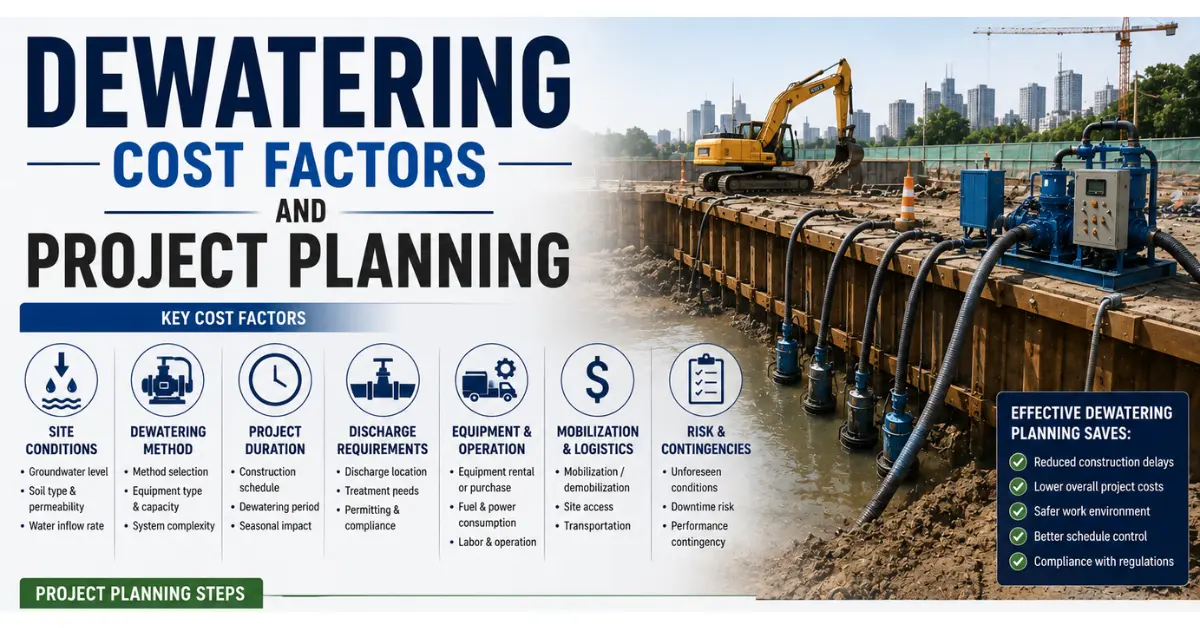
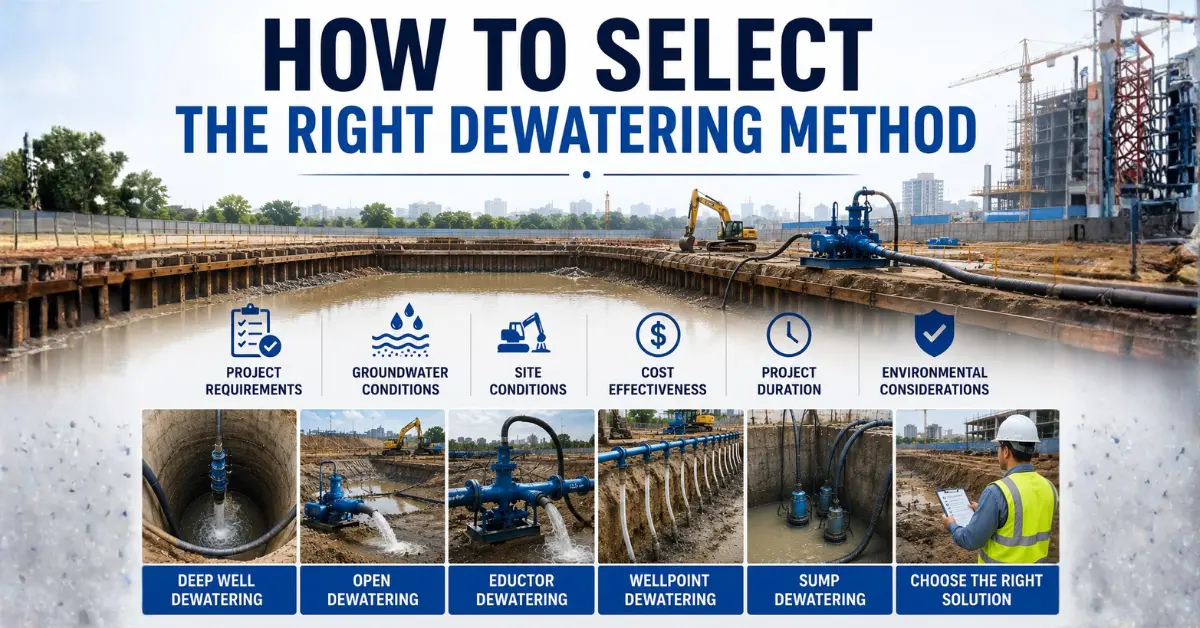
Common Dewatering Methods for Utility and Pipeline Trench Excavations
Several groundwater control techniques are commonly used for dewatering for utility and pipeline trench excavations.
The best solution depends on trench dimensions, soil conditions, and groundwater levels.
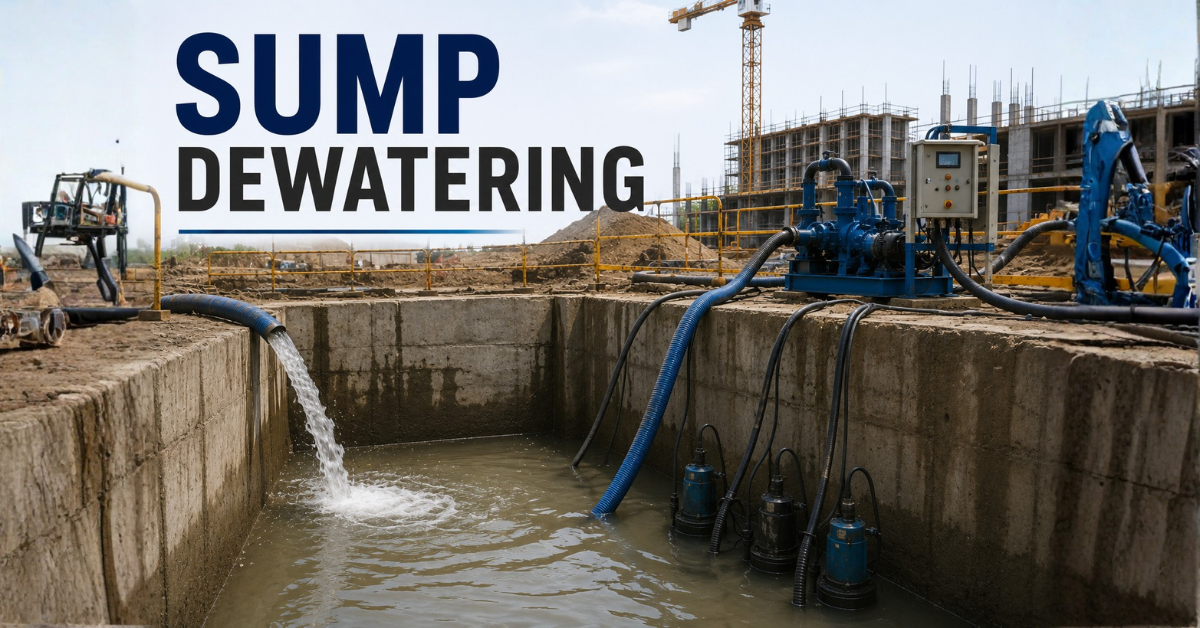
Sump Dewatering
Sump dewatering is one of the most widely used methods for trench projects.
Water entering the trench is directed toward low points or sump pits, where pumps remove the accumulated water.
Advantages
- Low installation cost
- Simple operation
- Flexible installation
Best Applications
- Shallow trenches
- Temporary projects
- Low groundwater inflows
Limitations
- Limited groundwater lowering capability
- Less effective in highly permeable soils
Wellpoint Dewatering Systems
Wellpoint systems use multiple small-diameter wellpoints connected to a vacuum pump.
Groundwater is lowered before it enters the trench.
Advantages
- Effective groundwater control
- Suitable for long trench excavations
- Reliable performance in sandy soils
Best Applications
- Utility corridors
- Sewer installations
- Pipeline projects
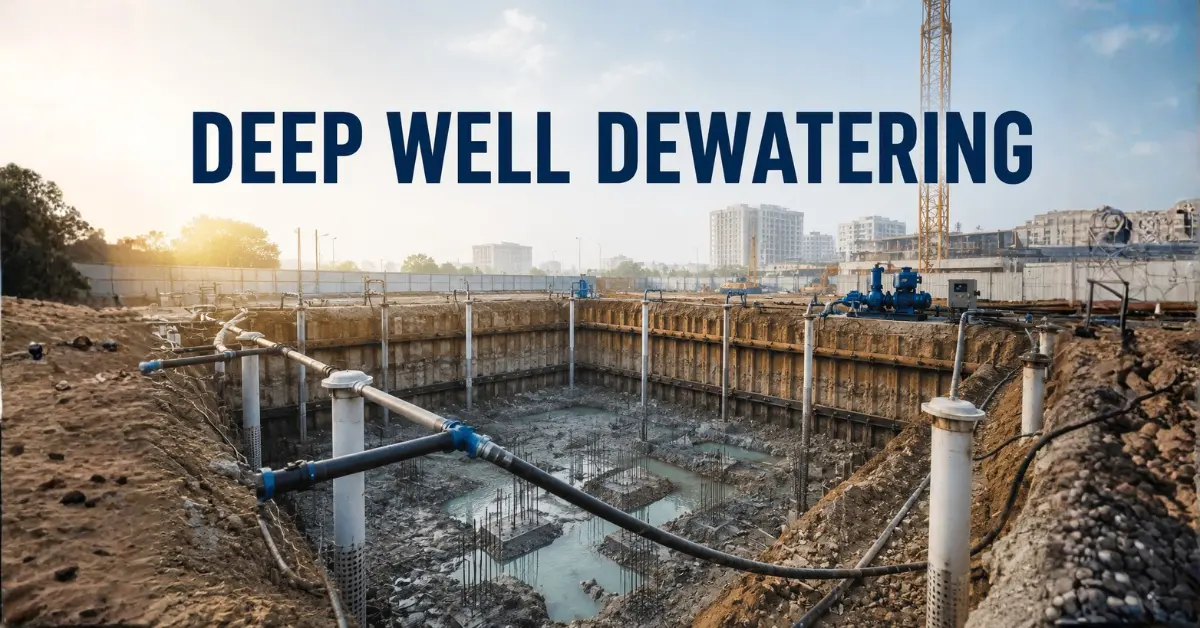
Deep Well Dewatering Systems
Deep well systems use drilled wells equipped with submersible pumps.
Advantages
- Significant groundwater drawdown
- High pumping capacity
- Suitable for larger projects
Best Applications
- Deep utility installations
- Large pipeline projects
- High groundwater conditions
Open Dewatering Methods
Open dewatering methods use drainage ditches, channels, and pumps to manage water entering the excavation.
Advantages
- Cost-effective
- Easy implementation
- Suitable for temporary water management
Best Applications
- Surface water control
- Roadside utility installations
- Shallow excavations
Eductor Dewatering Systems
Eductor systems use pressure-driven vacuum principles to remove groundwater from low-permeability soils.
Advantages
- Effective in clay soils
- Suitable for deeper excavations
Best Applications
- Challenging groundwater conditions
- Fine-grained soils
Soil Conditions and Dewatering Requirements
Soil characteristics significantly influence the effectiveness of dewatering for utility and pipeline trench excavations.
Sandy Soils
Groundwater moves quickly through sandy soils.
Common solutions include:
Gravel Soils
Gravel formations often generate high groundwater inflows.
Deep wells may be required.
Clay Soils
Groundwater movement is slower.
Sump systems and eductor systems are commonly used.
Mixed Soil Conditions
Projects involving multiple soil types may require a combination of dewatering methods.
Key Design Considerations
Proper planning is essential for successful dewatering for utility and pipeline trench excavations.
Trench Depth
Deeper trenches generally require more sophisticated groundwater control systems.
Trench Length
Long pipeline installations may require multiple dewatering zones.
Groundwater Conditions
Water table depth and groundwater flow rates influence system design.
Soil Permeability
Soil characteristics determine groundwater movement and pumping requirements.
Construction Schedule
Project duration affects equipment selection and operating costs.
Environmental Requirements
Water discharge must comply with local regulations.
Applications of Dewatering for Utility and Pipeline Trench Excavations
Dewatering is used across a wide range of underground infrastructure projects.
Water Supply Pipelines
Groundwater control supports safe trench excavation and pipe installation.
Sewer Systems
Deep sewer excavations frequently require extensive dewatering.
Stormwater Drainage Networks
Drainage system installation often encounters groundwater.
Electrical Utility Installations
Underground cable systems require stable trench conditions.
Telecommunications Infrastructure
Fiber optic and communication conduit installations often require temporary dewatering.
Gas Pipeline Construction
Pipeline corridors may cross areas with varying groundwater conditions.
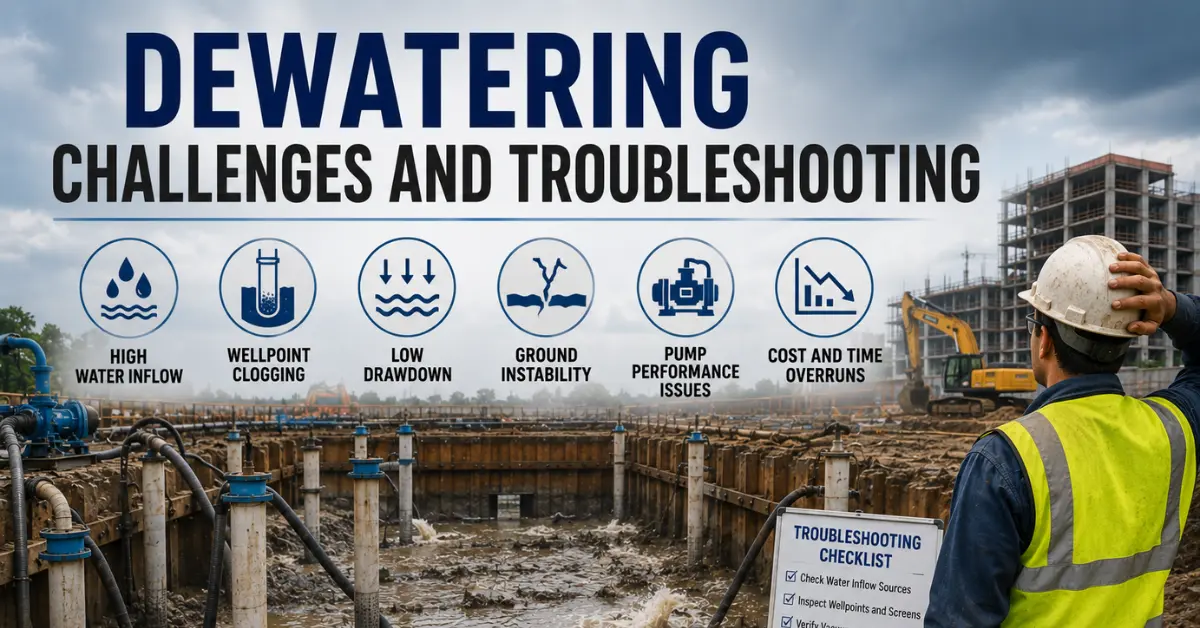
Common Challenges in Utility and Pipeline Trench Dewatering
Several challenges frequently affect trench dewatering operations.
Variable Groundwater Conditions
Groundwater levels may change throughout the project.
Long Excavation Lengths
Maintaining groundwater control over extended distances can be difficult.
Limited Site Access
Urban utility projects often operate in congested environments.
Weather Conditions
Rainfall can rapidly increase water inflows.
Existing Underground Infrastructure
Nearby utilities may complicate dewatering system installation.
Risks of Improper Dewatering
Poorly managed dewatering for utility and pipeline trench excavations can result in serious problems.
Trench Collapse
Groundwater weakens trench walls and increases collapse risks.
Installation Delays
Flooded trenches slow construction progress.
Pipe Misalignment
Unstable trench conditions can affect utility installation quality.
Equipment Damage
Standing water may damage construction equipment.
Safety Hazards
Flooded trenches create dangerous working conditions.
Increased Project Costs
Unexpected groundwater problems often lead to delays and redesigns.
Best Practices for Dewatering for Utility and Pipeline Trench Excavations
To maximize effectiveness and reduce risks, contractors should follow proven best practices.
Conduct Site Investigations
Accurate groundwater data supports effective system design.
Select the Appropriate Method
Match the dewatering system to actual site conditions.
Monitor Groundwater Levels
Regular monitoring helps verify performance.
Maintain Equipment
Routine maintenance reduces the risk of pump failures.
Install Backup Pumps
Emergency equipment provides protection against flooding.
Coordinate with Construction Activities
Dewatering operations should be integrated into the overall project schedule.
Follow Environmental Regulations
Discharge water should meet all applicable standards.
Environmental Considerations
Groundwater management activities can affect surrounding environments.
Important concerns include:
- Sediment discharge
- Water quality impacts
- Groundwater depletion
- Erosion and runoff
- Effects on nearby water bodies
Environmental monitoring and proper discharge practices help minimize these impacts.
Future Trends in Trench Dewatering
Advancements in groundwater management technology continue to improve project performance.
Emerging trends include:
- Smart groundwater monitoring systems
- Automated pump controls
- Remote monitoring capabilities
- Energy-efficient pumping equipment
- Real-time data collection
- Sustainable water reuse strategies
These innovations improve efficiency while reducing operating costs and environmental impacts.
Frequently Asked Questions
What is dewatering for utility and pipeline trench excavations?
Dewatering for utility and pipeline trench excavations is the process of removing or controlling groundwater and surface water to maintain dry and stable trench conditions during utility installation.
Why is dewatering necessary for trench excavations?
Groundwater can weaken trench walls, create flooding, reduce safety, and interfere with utility installation activities.
Which dewatering method is best for trench excavations?
The best method depends on trench depth, groundwater conditions, soil type, and project requirements. Common methods include sump pumping, wellpoints, deep wells, and open dewatering.
Can groundwater cause trench collapse?
Yes. Excess groundwater reduces soil strength and increases the risk of trench instability and collapse.
How long do trench dewatering systems operate?
The duration depends on project size, groundwater conditions, and construction schedules. Some systems operate for a few days, while others may remain active for several months.
Conclusion
Dewatering for utility and pipeline trench excavations is a vital component of successful underground infrastructure construction. By controlling groundwater and surface water, dewatering systems improve trench stability, enhance worker safety, support accurate utility installation, and help projects remain on schedule.
Whether using sump systems, wellpoints, deep wells, open dewatering methods, or eductor systems, selecting the right groundwater control solution requires careful evaluation of site conditions, trench dimensions, soil properties, and groundwater behavior. Proper planning, monitoring, maintenance, and environmental compliance are essential for achieving reliable performance.
As utility and pipeline networks continue to expand worldwide, effective dewatering for utility and pipeline trench excavations will remain a critical factor in delivering safe, efficient, and high-quality infrastructure projects.