Groundwater control is a critical part of many construction, infrastructure, and excavation projects. Whether constructing a basement, installing underground utilities, building roads, or developing large infrastructure projects, effective dewatering is often necessary to maintain safe and stable working conditions.
However, dewatering can represent a significant portion of a project’s budget. The overall cost depends on numerous technical, environmental, and operational factors. Understanding dewatering cost factors during the planning stage helps project owners, contractors, and engineers avoid unexpected expenses, improve budgeting accuracy, and select the most cost-effective groundwater control solution.
Successful project planning requires more than simply choosing a dewatering method. It involves evaluating site conditions, estimating groundwater inflows, assessing environmental requirements, and developing contingency plans for changing site conditions.
This guide explains the most important dewatering cost factors, common project planning considerations, budgeting strategies, and best practices for managing dewatering costs effectively.
Why Understanding Dewatering Cost Factors Is Important
Many construction projects underestimate the complexity and cost of groundwater control. Inadequate planning can lead to:
- Budget overruns
- Construction delays
- Equipment shortages
- Inefficient system design
- Increased operating costs
- Environmental compliance issues
Understanding dewatering cost factors early in the project lifecycle helps improve decision-making and reduces financial risk.
Effective planning allows project teams to:
- Develop accurate budgets
- Select suitable dewatering methods
- Reduce unexpected costs
- Improve construction scheduling
- Enhance project efficiency
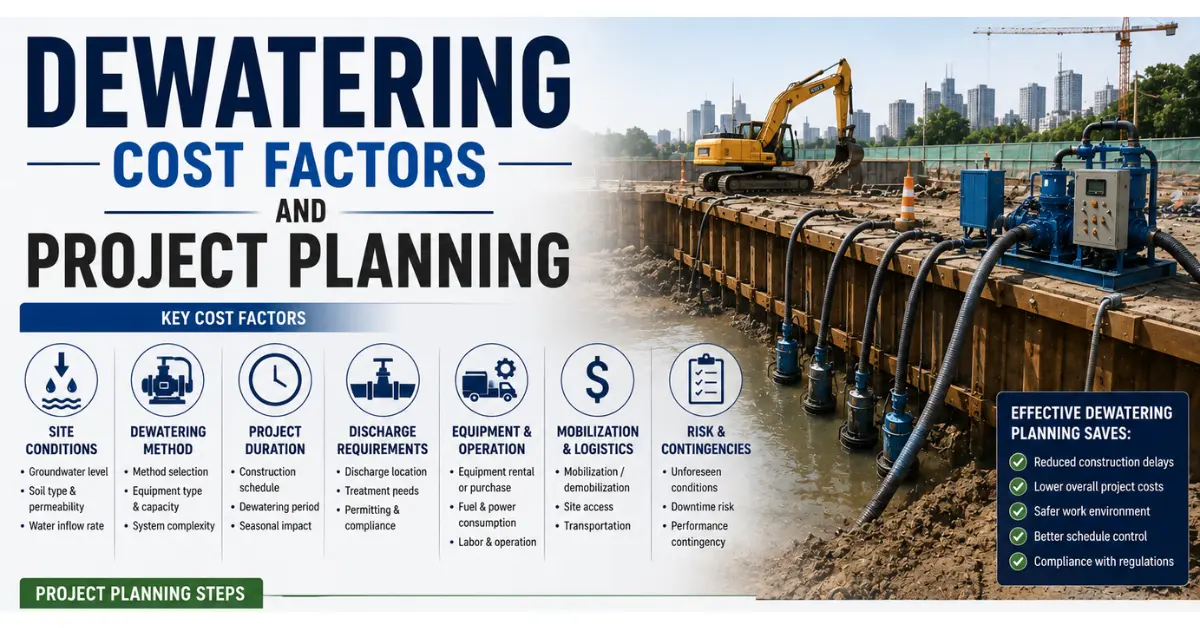
Major Dewatering Cost Factors
Several variables influence the total cost of a dewatering system.
Groundwater Conditions
One of the most significant dewatering cost factors is the site’s groundwater condition.
Engineers must evaluate:
- Groundwater table depth
- Groundwater inflow rates
- Seasonal fluctuations
- Aquifer characteristics
- Recharge rates
Sites with high groundwater inflows generally require larger and more expensive dewatering systems.
Higher pumping requirements typically result in:
- Additional wells
- Larger pumps
- Increased energy consumption
- Higher maintenance costs
Excavation Depth
Excavation depth directly impacts dewatering requirements.
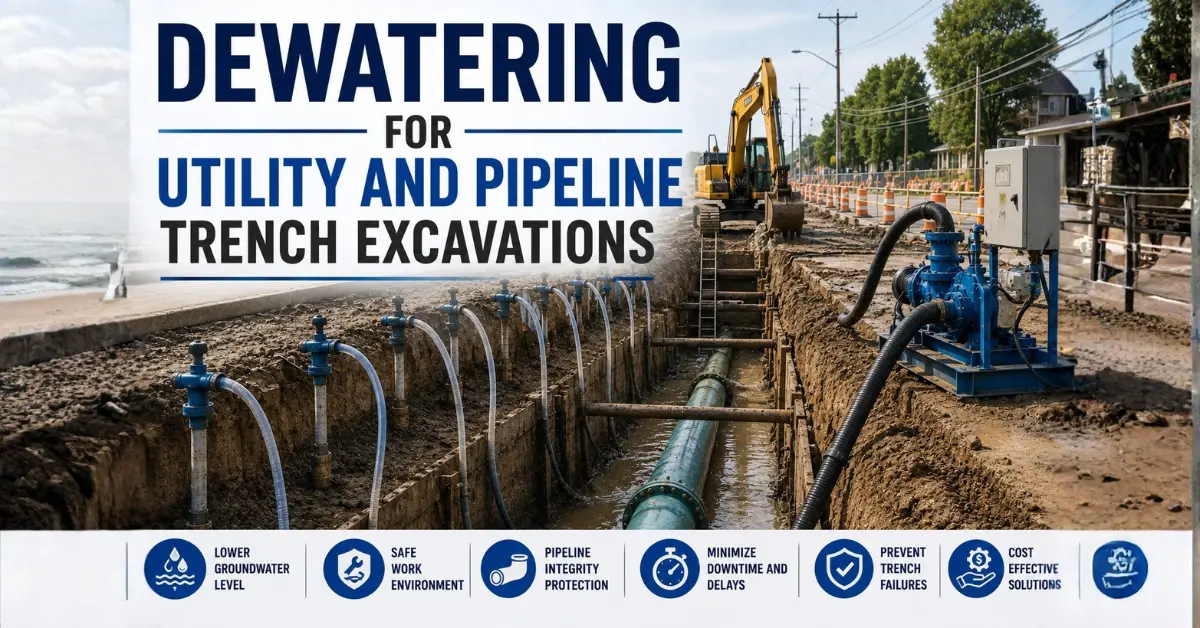
Shallow excavations may only require:
- Open dewatering
- Sump pumping
- Temporary drainage systems
Deep excavations often require:
- Wellpoint systems
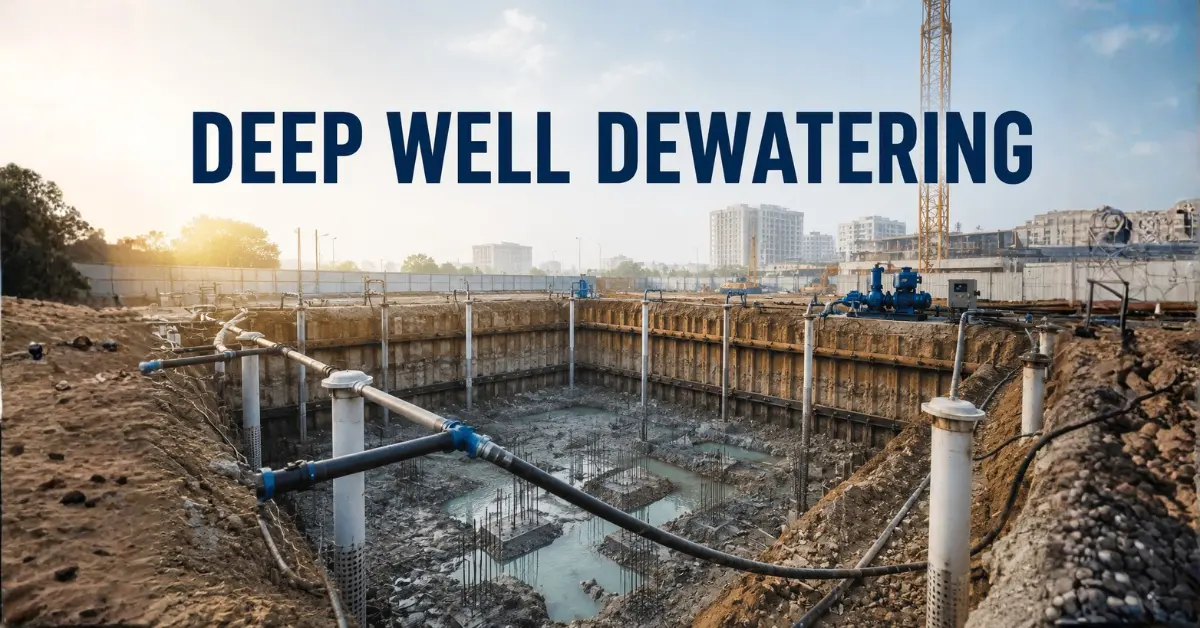
- Deep well systems
- Eductor systems
As excavation depth increases, both installation and operational costs generally rise.
Soil Type and Permeability
Soil conditions are among the most important dewatering cost factors.
Different soil types influence groundwater movement and system performance.
Sandy Soils
Sandy soils allow groundwater to move freely, often requiring larger pumping capacities.
Gravel Soils
Gravel formations may produce substantial groundwater inflows, increasing system requirements.
Clay Soils
Clay soils restrict groundwater movement but may require specialized methods such as eductor systems.
Mixed Soil Conditions
Projects with varying soil conditions often require more complex dewatering designs.
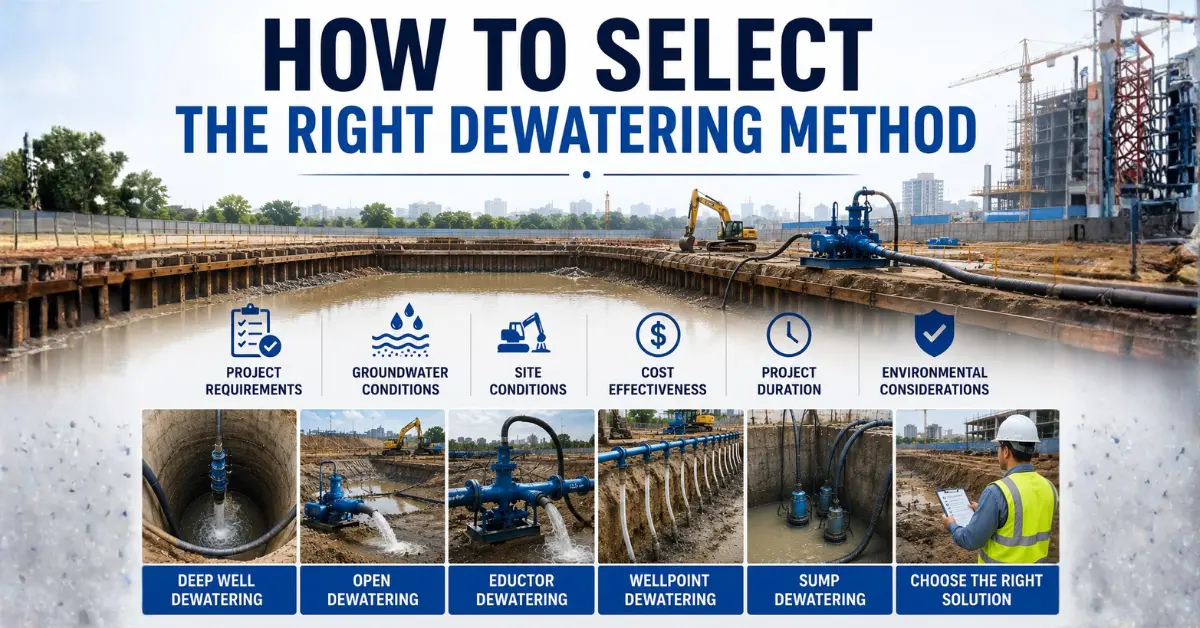
Dewatering Method Selection
The selected groundwater control method significantly affects project costs.
Open Dewatering
Generally the lowest-cost option.
Suitable for:
- Surface water control
- Shallow excavations
- Temporary projects
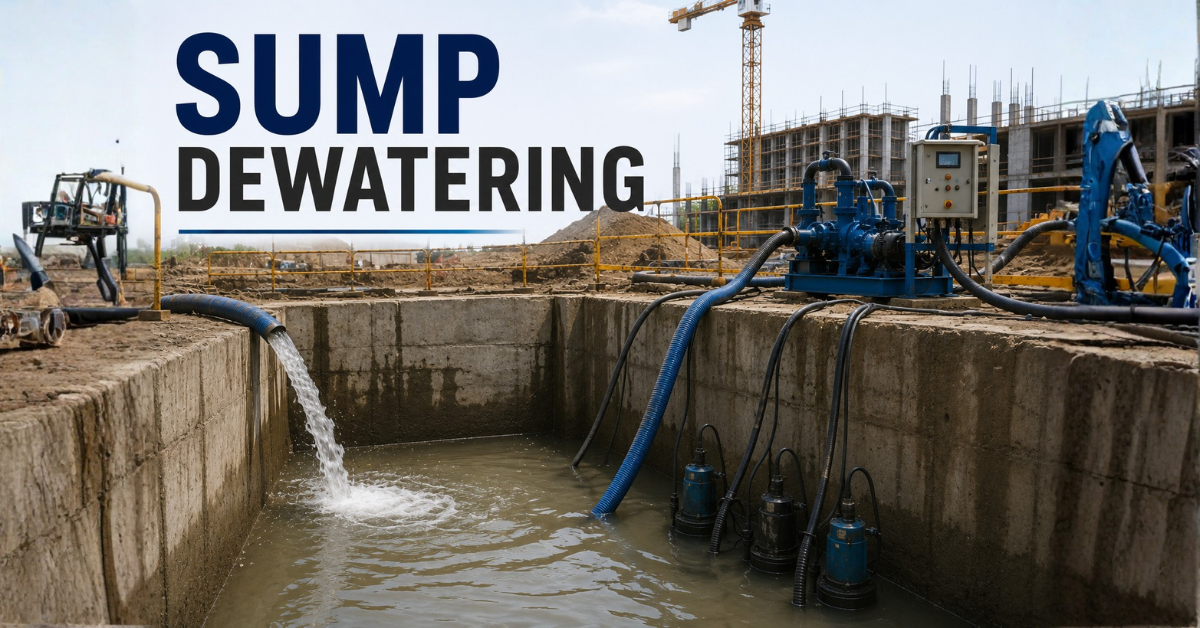
Sump Dewatering
Relatively inexpensive and easy to install.
Suitable for:
- Small excavations
- Limited groundwater inflows
Wellpoint Systems
Moderate installation and operating costs.
Suitable for:
- Shallow to medium-depth excavations
- Sandy soils
Deep Well Systems
Higher installation costs but effective for large projects.
Suitable for:
- Deep excavations
- Significant groundwater inflows
Eductor Systems
Typically among the most expensive options.
Suitable for:
- Low-permeability soils
- Specialized groundwater control applications
Project Duration
Project duration is a major contributor to overall dewatering costs.
Long-term dewatering projects require:
- Extended equipment rentals
- Increased fuel or electricity consumption
- Additional maintenance
- Ongoing monitoring
A project lasting several months will generally incur significantly higher operating costs than a short-term excavation.
Equipment Costs
Equipment selection influences both capital and operational expenses.
Typical equipment costs may include:
- Pumps
- Wellpoints
- Deep wells
- Header pipes
- Discharge piping
- Generators
- Monitoring equipment
Larger and more complex systems naturally require higher equipment investments.
Installation Costs
Installation expenses vary depending on project complexity.
Common installation activities include:
- Site investigation
- Borehole drilling
- Well installation
- Pipe installation
- Pump setup
- Electrical connections
Deep well and eductor systems generally require specialized contractors and equipment, increasing installation costs.
Power and Fuel Consumption
Energy usage is often one of the largest ongoing dewatering cost factors.
Most systems require continuous operation throughout construction.
Power costs depend on:
- Pump size
- Operating duration
- Pump efficiency
- Groundwater inflow rates
Projects in remote areas may require diesel-powered systems, resulting in additional fuel expenses.
Monitoring and Maintenance Costs
Dewatering systems require regular monitoring to ensure effective performance.
Typical monitoring activities include:
- Groundwater level measurements
- Pump inspections
- Flow monitoring
- Equipment maintenance
Ignoring maintenance can lead to equipment failures and expensive project delays.
Environmental Compliance Costs
Environmental requirements can significantly affect project budgets.
Potential costs include:
- Water quality testing
- Sediment control measures
- Filtration systems
- Environmental monitoring
- Permit applications
Many jurisdictions require treatment of discharged water before release.
These compliance requirements are important dewatering cost factors that should not be overlooked during budgeting.
Discharge Management Costs
Removed groundwater must often be transported or treated before discharge.
Discharge-related expenses may include:
- Temporary storage tanks
- Treatment systems
- Sediment basins
- Discharge piping
- Water transportation
Projects with strict discharge regulations may experience higher costs.
Site Access and Logistics
Site conditions can affect installation and operational expenses.
Factors include:
- Limited access areas
- Urban construction sites
- Congested work zones
- Traffic restrictions
- Remote project locations
Difficult access often increases labor and equipment costs.
Weather Conditions
Weather can influence dewatering performance and overall project expenses.
Heavy rainfall may require:
- Additional pumping capacity
- Emergency equipment
- Increased maintenance
- Temporary drainage improvements
Weather-related risks should be considered during project planning.
Budgeting for Dewatering Projects
Effective budgeting begins with a thorough understanding of site conditions.
A typical dewatering budget should include:
Investigation Costs
- Geotechnical studies
- Hydrogeological assessments
- Groundwater monitoring
Design Costs
- Engineering design
- System modeling
- Drawdown analysis
Installation Costs
- Drilling
- Equipment setup
- System commissioning
Operating Costs
- Power consumption
- Fuel
- Labor
- Monitoring
Maintenance Costs
- Repairs
- Replacement parts
- Routine servicing
Contingency Costs
Unexpected groundwater conditions often require additional resources.
Many project teams allocate contingency budgets specifically for dewatering-related uncertainties.
How Proper Planning Reduces Dewatering Costs
Careful planning can significantly reduce overall project expenses.
Conduct Thorough Site Investigations
Accurate groundwater data helps prevent overdesign and underdesign.
Select the Appropriate Method
The most expensive system is not always the best solution.
Choose a method that matches actual site conditions.
Optimize Well Layout
Efficient system design can reduce the number of wells and pumps required.
Use Energy-Efficient Equipment
Modern pumps often reduce long-term operating costs.
Monitor System Performance
Regular monitoring helps identify inefficiencies early.
Develop Contingency Plans
Preparation reduces costly downtime when unexpected issues arise.
Common Mistakes That Increase Dewatering Costs
Several common mistakes can significantly increase project expenses.
Inadequate Site Investigation
Poor groundwater data often leads to ineffective system design.
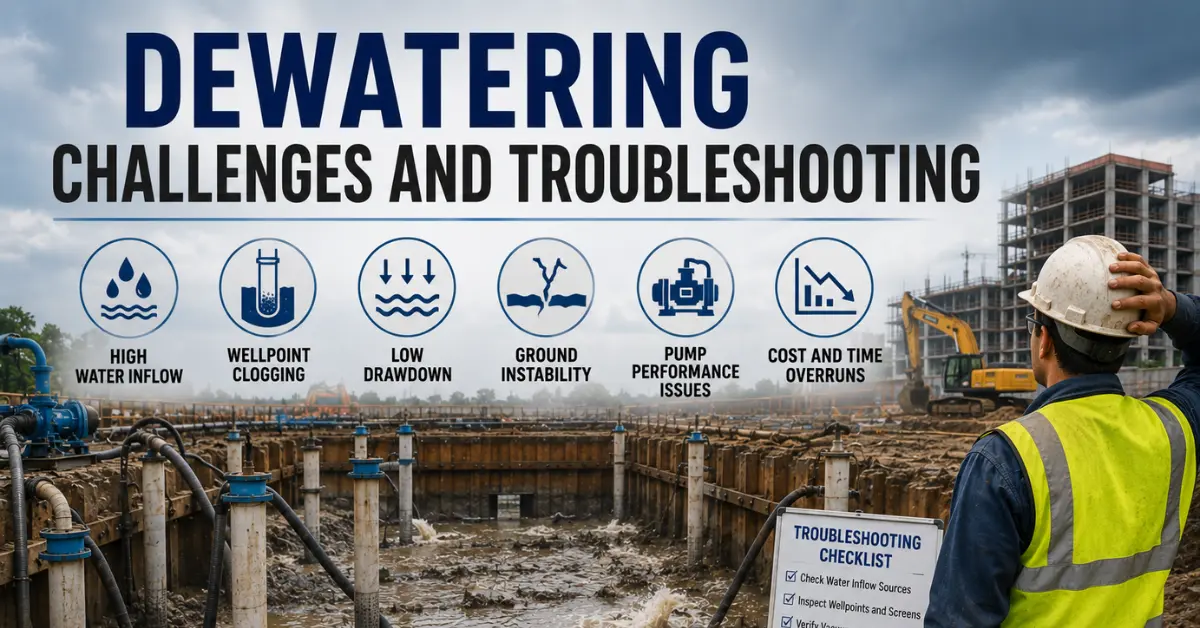
Underestimating Groundwater Inflows
Unexpected water volumes can require costly system upgrades.
Improper Equipment Selection
Oversized or undersized equipment increases operating costs.
Lack of Monitoring
Undetected performance issues may result in flooding and delays.
Ignoring Environmental Requirements
Non-compliance can lead to fines and project interruptions.
Future Trends Affecting Dewatering Costs
Technological advancements continue to improve groundwater management efficiency.
Emerging innovations include:
- Smart groundwater monitoring systems
- Automated pump controls
- Remote performance tracking
- Energy-efficient pumping equipment
- Advanced groundwater modeling software
These technologies help reduce operating costs while improving reliability.
Frequently Asked Questions
What are the main dewatering cost factors?
The main dewatering cost factors include groundwater conditions, excavation depth, soil type, project duration, equipment requirements, energy consumption, and environmental compliance.
Which dewatering method is the least expensive?
Open dewatering and sump pumping are generally the most economical solutions for shallow excavations with limited groundwater inflows.
Why do deep excavations cost more to dewater?
Deep excavations typically require more wells, larger pumps, and higher operating costs to achieve the required groundwater drawdown.
How can dewatering costs be reduced?
Costs can be reduced through accurate site investigations, proper system design, energy-efficient equipment, and continuous performance monitoring.
Should dewatering be included in early project planning?
Yes. Groundwater control should be evaluated during the initial planning phase to improve budgeting accuracy and avoid unexpected expenses.
Conclusion
Understanding dewatering cost factors is essential for successful project planning and budgeting. Groundwater conditions, soil characteristics, excavation depth, project duration, equipment requirements, and environmental obligations all influence the overall cost of groundwater control.
By identifying these dewatering cost factors early, project teams can select the most suitable dewatering method, improve cost estimates, reduce risks, and avoid expensive delays. Proper site investigations, efficient system design, regular monitoring, and proactive planning are key to managing costs effectively.
As construction and infrastructure projects continue to grow in scale and complexity, careful consideration of dewatering cost factors will remain critical for delivering projects safely, efficiently, and within budget.