Water management is a critical requirement across many industries, including construction, mining, infrastructure development, utilities, and environmental projects. Excess groundwater or surface water can interfere with excavation activities, reduce soil stability, damage equipment, and create unsafe working conditions. To address these challenges, organizations use dewatering systems to control and remove unwanted water.
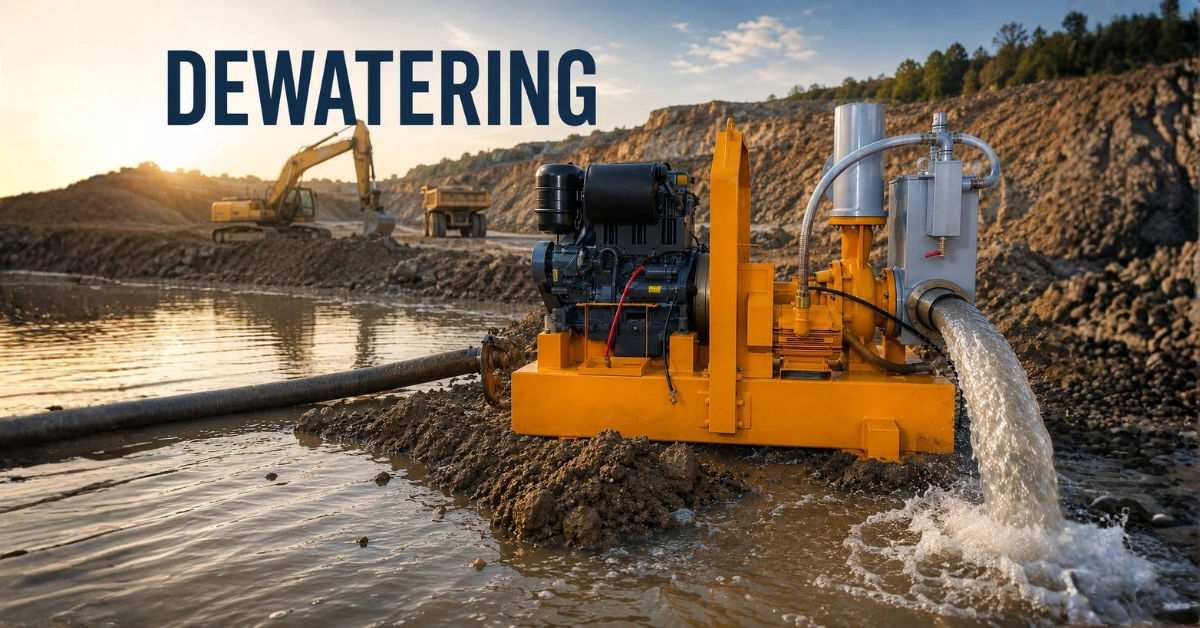
Dewatering is the process of removing groundwater, rainwater, or surface water from a site, excavation, or work area to create safe, dry, and stable operating conditions. Depending on project requirements, dewatering may be a temporary measure during construction or a long-term groundwater management solution.
Effective dewatering improves safety, enhances productivity, protects equipment, and supports successful project execution. Whether for a building foundation, a mining operation, a utility trench, or a major infrastructure project, proper dewatering plays a crucial role in maintaining stable working conditions.
This guide provides a complete overview of dewatering, including how it works, common dewatering methods, applications, benefits, challenges, and key factors involved in selecting the right dewatering solution.
What Is Dewatering?
Dewatering is the controlled removal of water from soil, excavations, underground structures, work sites, or industrial operations.
The primary goal of dewatering is to lower groundwater levels or remove accumulated water so that work can be carried out safely and efficiently.
Water can enter a site from several sources:
- Groundwater below the surface
- Rainfall and stormwater
- Nearby rivers, lakes, or water bodies
- Seepage through soil layers
- Underground aquifers
Without effective dewatering, water can flood work areas, weaken soils, delay operations, and significantly increase project costs.
Why Is Dewatering Important?
Dewatering plays a vital role in many industries because excess water creates operational, structural, and safety challenges.
Improved Safety
Waterlogged work areas increase the risk of slips, falls, equipment accidents, and excavation failures.
Enhanced Ground Stability
Removing groundwater improves soil strength and reduces the likelihood of collapse, settlement, or instability.
Better Working Conditions
Dry work environments allow crews to operate more efficiently and install infrastructure with greater accuracy.
Protection of Equipment
Dewatering helps protect machinery, electrical systems, and construction equipment from water damage.
Reduced Project Delays
Groundwater issues can significantly slow progress. Effective dewatering helps maintain schedules and improve productivity.
How Does Dewatering Work?
The objective of dewatering is to control water movement and maintain a lower groundwater level around the work area.
Most dewatering systems operate by:
- Collecting groundwater through wells, drains, or collection points.
- Pumping water away from the site.
- Discharging or treating the water appropriately.
- Continuously monitoring groundwater levels.
As water is removed, groundwater levels drop around the excavation or work area, creating a dry and stable environment.
The exact dewatering system used depends on site conditions, groundwater characteristics, excavation depth, and project requirements.
Understanding Groundwater and the Water Table
Before selecting a dewatering system, it is important to understand groundwater behavior.
What Is Groundwater?
Groundwater is water stored beneath the earth’s surface within soil and rock formations.
What Is the Water Table?
The water table is the upper level of groundwater within the soil.
When excavations extend below the water table, groundwater naturally flows into the excavation.
Why Groundwater Matters
Groundwater pressure can:
- Destabilize excavation walls
- Reduce soil bearing capacity
- Cause flooding
- Delay project activities
- Affect nearby structures
Understanding groundwater conditions is essential for successful dewatering design.
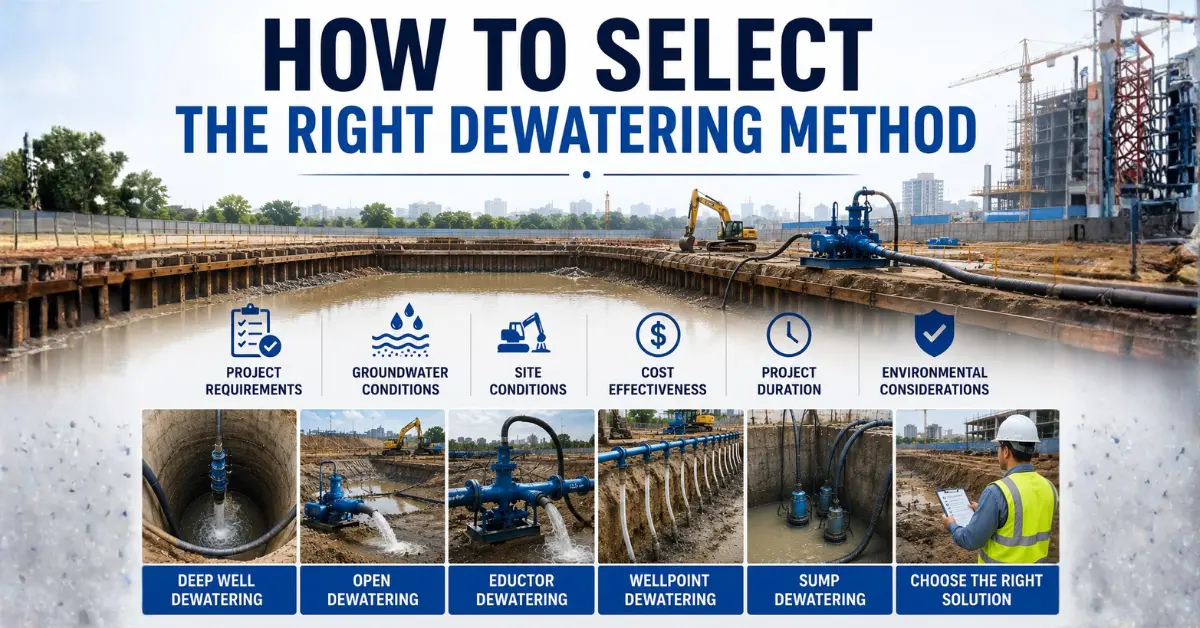
Common Dewatering Methods
Several dewatering methods are available, each suited to different site conditions and groundwater challenges.
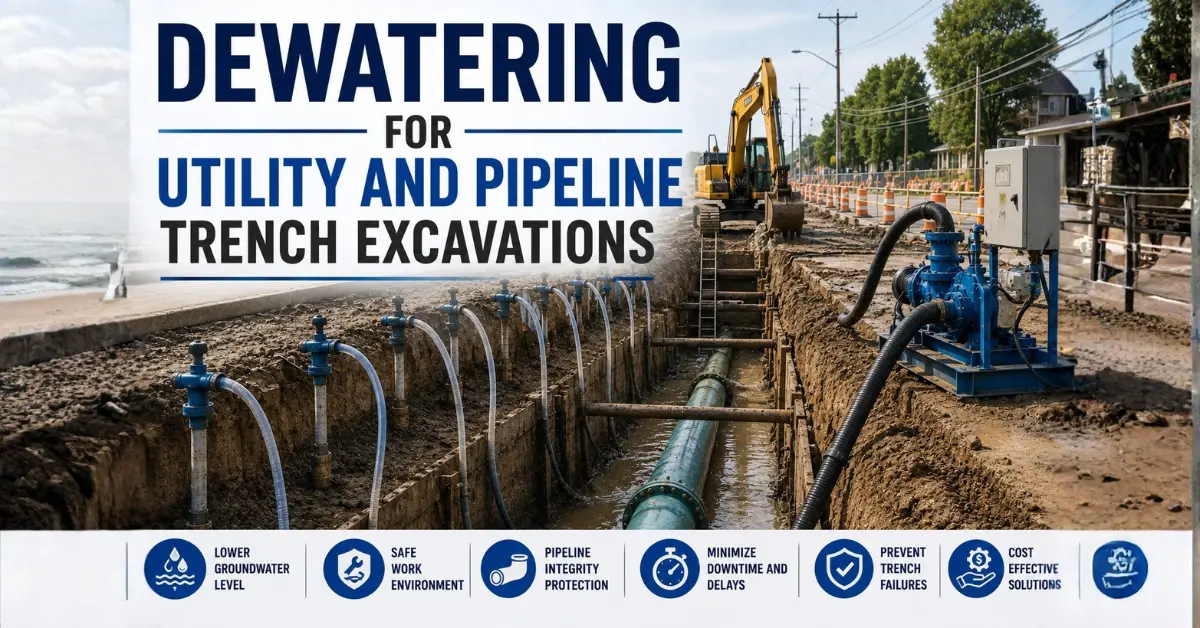
Wellpoint Dewatering Systems
Wellpoint dewatering systems use multiple small-diameter wells connected to a vacuum pump.
Best for:
- Shallow excavations
- Sandy soils
- Utility trenches
- Basement construction
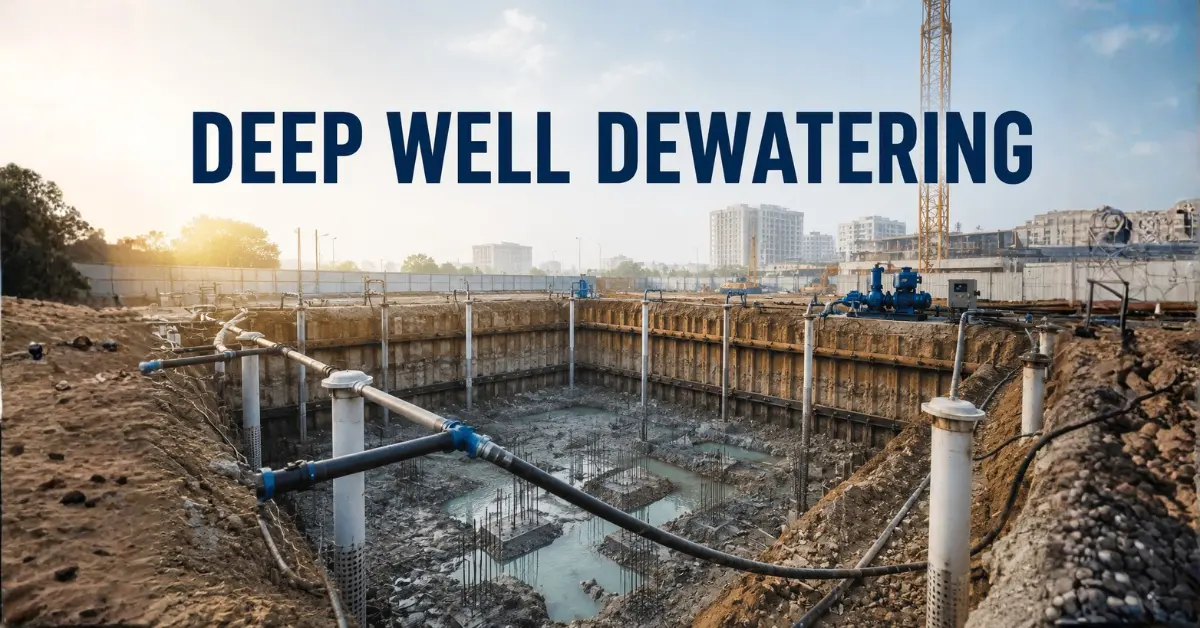
Deep Well Dewatering Systems
Deep well dewatering systems use drilled wells equipped with submersible pumps.
Best for:
- Deep excavations
- High groundwater inflows
- Large project sites
- Infrastructure developments
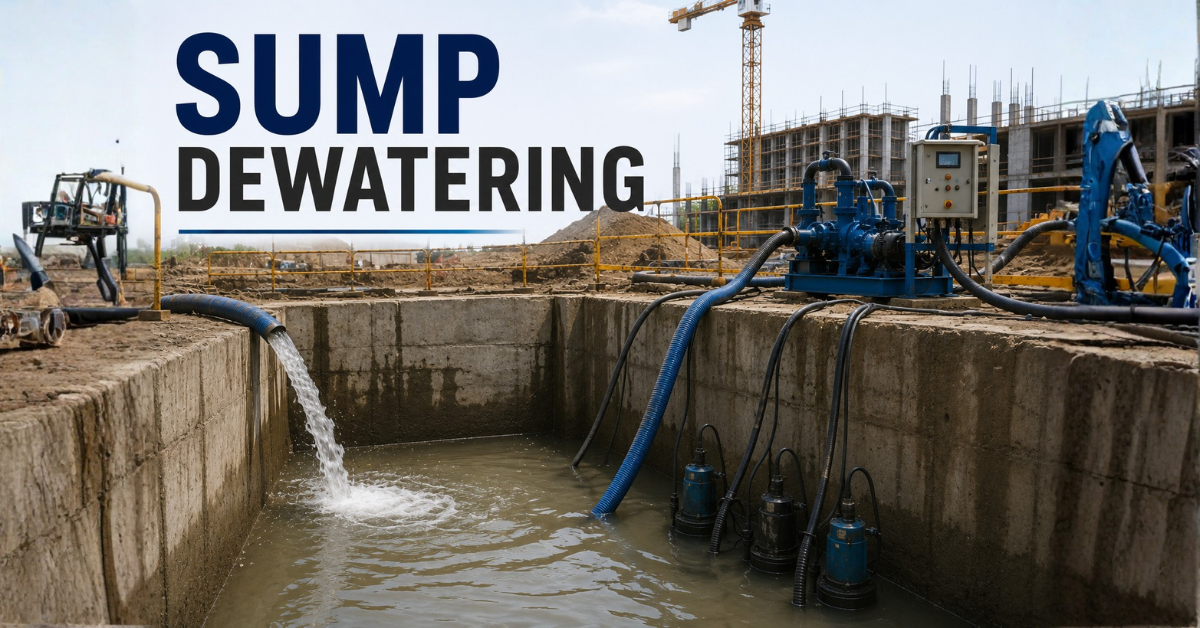
Sump Dewatering
Sump dewatering collects water in designated pits and pumps it away.
Best for:
- Small excavations
- Temporary water removal
- Low groundwater conditions
Eductor Dewatering Systems
Eductor dewatering systems use high-pressure water to create suction and remove groundwater.
Best for:
- Clay and silt soils
- Deep groundwater control
- Low-permeability formations
Open Dewatering Methods
Open dewatering uses ditches, channels, and drainage systems to direct water toward pumps.
Best for:
- Surface water management
- Temporary drainage
- Shallow excavations
Dewatering Method Comparison
| Method | Typical Depth | Suitable Soil | Relative Cost | Common Applications |
| Wellpoint Dewatering | Shallow | Sand, Silt | Medium | Basements, Utilities |
| Deep Well Dewatering | Deep | Sand, Gravel | High | Large Excavations |
| Sump Dewatering | Shallow | Mixed Soils | Low | Small Projects |
| Eductor Dewatering | Deep | Clay, Silt | High | Low-Permeability Soils |
| Open Dewatering | Shallow | Surface Water Areas | Low | Temporary Drainage |
Applications of Dewatering
Dewatering is used across many industries and project types.
Construction Projects
Construction is one of the largest users of dewatering systems.
Common applications include:
- Basement excavations
- Foundations
- Utility trenches
- Road construction
- Bridge construction
Mining Operations
Mining projects use dewatering to control groundwater and maintain safe working environments.
Infrastructure Development
Large infrastructure projects often require groundwater control for tunnels, transportation facilities, and underground structures.
Utility Installations
Pipeline and utility installations frequently encounter groundwater and require temporary dewatering.
Environmental Projects
Dewatering can support remediation activities, landfill projects, environmental restoration, and waste management initiatives.
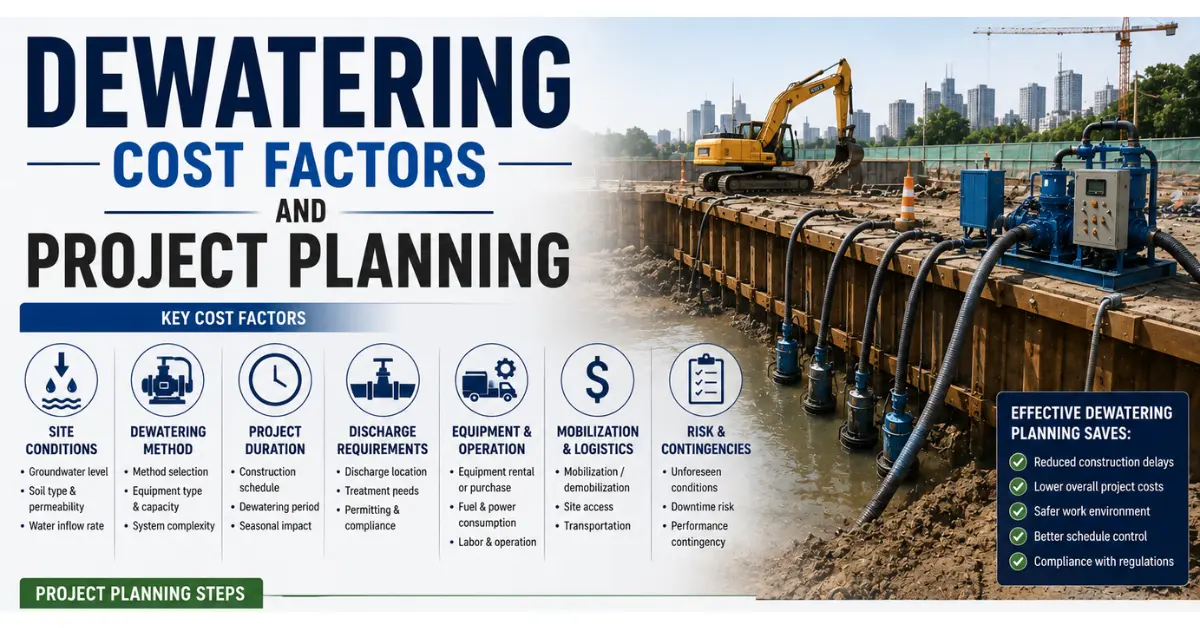
Key Factors That Affect Dewatering Design
Several factors influence the effectiveness of a dewatering system.
Soil Type
Soil permeability determines how easily groundwater moves toward collection points.
Groundwater Conditions
Water table depth and groundwater inflow rates influence system requirements.
Project Size
Larger projects generally require more extensive dewatering systems.
Excavation Depth
Deeper excavations often require more sophisticated groundwater control solutions.
Environmental Regulations
Discharge requirements and environmental protection measures affect dewatering system design.
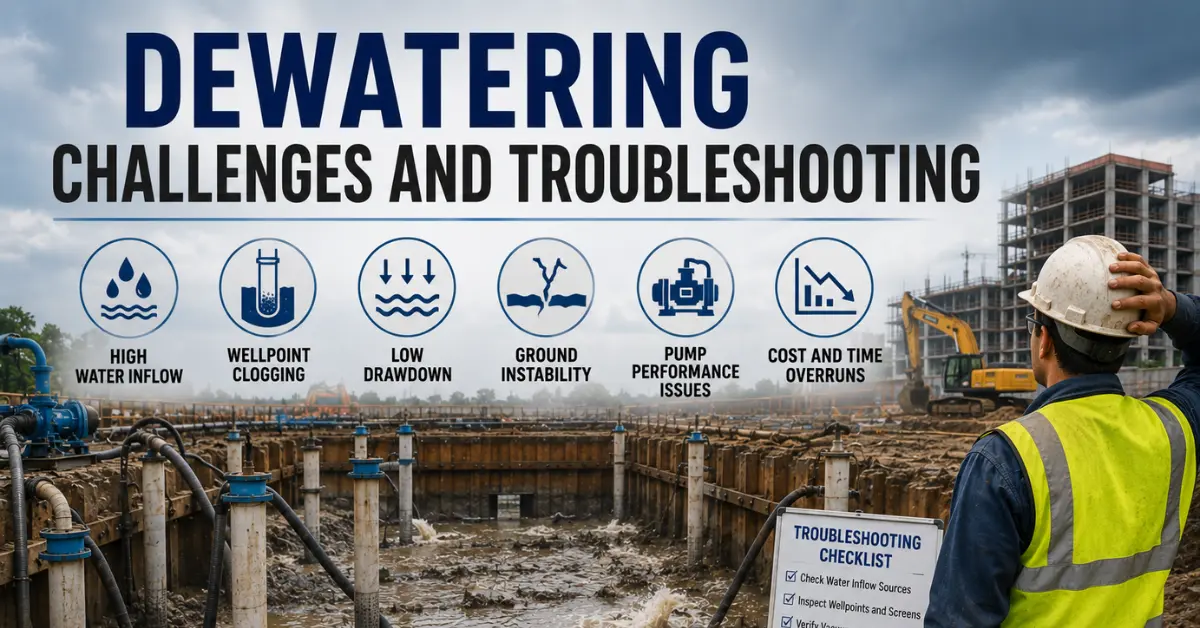
Common Dewatering Challenges
Even well-designed dewatering systems can face operational challenges.
Equipment Failures
Pump failures can quickly lead to flooding and project disruption.
Soil Settlement
Excessive groundwater lowering may affect nearby structures.
Clogged Wells
Fine sediments can reduce dewatering system efficiency.
Unexpected Groundwater Inflows
Changing groundwater conditions can impact performance.
Environmental Compliance
Water discharge must comply with local environmental regulations.
Best Practices for Successful Dewatering
Successful dewatering projects typically follow several best practices.
Conduct Thorough Site Investigations
Accurate groundwater data is essential for effective dewatering design.
Select the Appropriate Method
Choose a dewatering solution based on soil conditions, groundwater levels, excavation depth, and project requirements.
Monitor Performance
Regular monitoring helps identify issues before they become critical.
Maintain Equipment
Routine maintenance reduces downtime and improves reliability.
Prepare Contingency Plans
Backup pumps and emergency procedures help manage unexpected situations.
Train Personnel
Workers involved in dewatering operations should understand system operation, maintenance requirements, and emergency procedures.
Environmental Considerations
Dewatering can affect surrounding environments if not managed properly.
Important considerations include:
- Sediment control
- Water quality protection
- Groundwater depletion
- Erosion prevention
- Protection of nearby ecosystems
- Regulatory compliance
Responsible discharge practices and environmental monitoring help reduce impacts and support sustainable dewatering operations.
Future Trends in Dewatering
Advancements in technology continue to improve dewatering performance.
Emerging trends include:
- Smart groundwater monitoring
- Automated pumping systems
- Remote performance tracking
- Energy-efficient equipment
- Advanced groundwater modeling
- Sustainable water reuse practices
- Real-time sensor technology
These innovations improve dewatering efficiency while reducing environmental impacts and operating costs.
Frequently Asked Questions
What is dewatering?
Dewatering is the process of removing groundwater or surface water from a site, excavation, or work area.
Why is dewatering necessary?
Dewatering improves safety, increases soil stability, protects equipment, and supports efficient project execution.
What are the most common dewatering methods?
Common methods include wellpoint dewatering, deep well dewatering, sump dewatering, eductor dewatering, and open dewatering.
How is a dewatering method selected?
Selection depends on soil conditions, groundwater levels, excavation depth, project requirements, and environmental considerations.
Can dewatering affect nearby structures?
Yes. Improper groundwater lowering can cause settlement or other impacts on nearby infrastructure.
Is dewatering only used in construction?
No. Dewatering is also widely used in mining, infrastructure development, environmental projects, utility installations, and industrial operations.
Conclusion
Dewatering is a critical groundwater control process used across construction, mining, infrastructure, utility, and environmental projects. By removing excess groundwater and surface water, dewatering systems create safer, more stable, and more productive working conditions.
Successful dewatering requires an understanding of groundwater behavior, soil conditions, project requirements, and environmental responsibilities. Whether using wellpoint dewatering systems, deep well dewatering systems, sump dewatering, eductor dewatering, or open dewatering methods, selecting the right solution is essential for achieving effective water management.
As industries continue to undertake larger and more complex projects, dewatering will remain a fundamental component of safe and efficient operations, helping organizations manage water challenges while maintaining productivity, compliance, and long-term project success.