Wellpoint Dewatering Systems: Design, Installation, and Applications
Groundwater is one of the most common challenges encountered during excavation and construction projects. When groundwater enters an excavation, it can reduce soil stability, delay construction activities, and create unsafe working conditions. To address these challenges, contractors often rely on wellpoint dewatering systems.
A wellpoint dewatering system is one of the most widely used groundwater control methods for shallow to medium-depth excavations. It is particularly effective in sandy and silty soils where groundwater can flow relatively easily. The system lowers the water table around an excavation, creating dry and stable conditions for construction activities.
This guide explains how wellpoint dewatering systems work, their components, design considerations, installation procedures, advantages, limitations, and common applications.
What Is a Wellpoint Dewatering System?
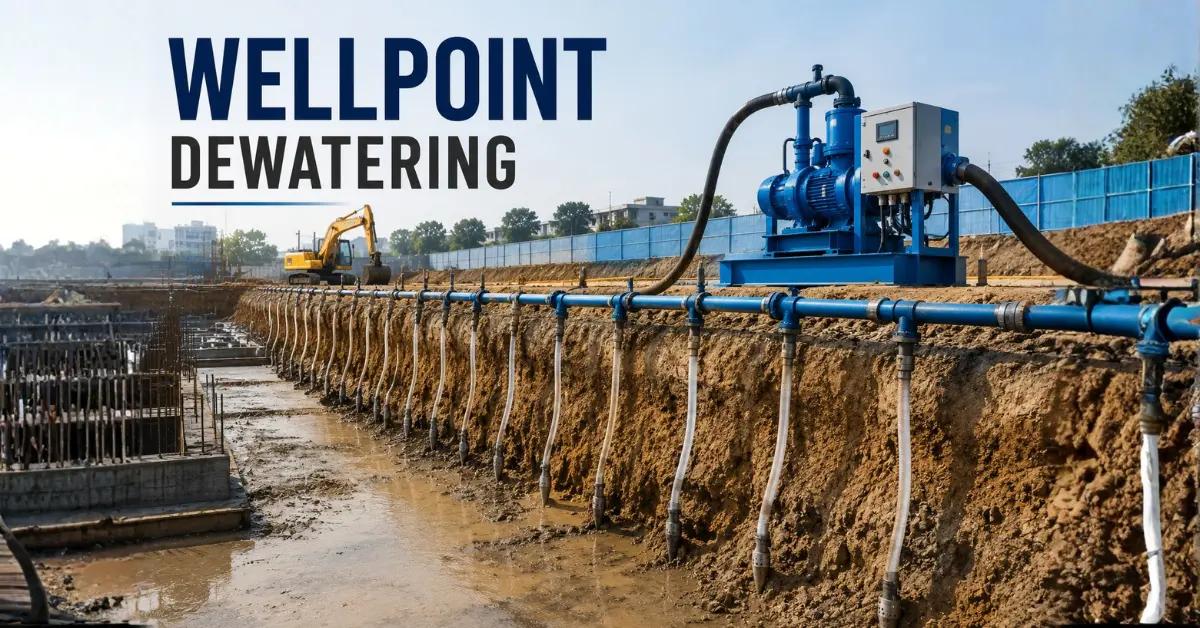
A wellpoint dewatering system consists of a series of small-diameter wells, known as wellpoints, installed around an excavation site. These wellpoints are connected to a common header pipe that leads to a vacuum-assisted pump.
The pump creates suction within the system, drawing groundwater through the wellpoints and discharging it away from the construction area. As groundwater is removed, the water table is lowered, reducing hydrostatic pressure and keeping the excavation dry.
Wellpoint systems are commonly used for:
- Building foundations
- Basement excavations
- Utility trench installations
- Road construction projects
- Retaining wall construction
- Infrastructure developments
Because of their flexibility and effectiveness, wellpoint systems are among the most frequently specified dewatering methods in construction projects.
How Does a Wellpoint Dewatering System Work?
The principle behind a wellpoint system is relatively simple.
A series of wellpoints are installed around the excavation perimeter. These wellpoints extend below the desired groundwater level and are connected to a header pipe.
When the vacuum pump operates:
- Groundwater enters the wellpoint screens.
- Water flows into the header pipe.
- The pump removes water from the system.
- Groundwater levels gradually decrease.
- The lowered water table is maintained throughout construction.
The process creates a cone of depression around each wellpoint. When multiple wellpoints operate together, these cones overlap and lower groundwater levels across the entire excavation area.
The effectiveness of the system depends on soil permeability, wellpoint spacing, excavation depth, and pump capacity.
Main Components of a Wellpoint System
A typical wellpoint dewatering system consists of several key components.
Wellpoints
Wellpoints are small-diameter pipes equipped with screened sections that allow groundwater to enter while preventing excessive soil intrusion.
These are installed at regular intervals around the excavation.
Riser Pipes
Each wellpoint connects to a vertical riser pipe that transports groundwater to the header system.
Header Pipe
The header pipe serves as the main collection line, carrying water from multiple wellpoints to the pump.
Vacuum Pump
The vacuum pump generates suction within the system and maintains continuous groundwater removal.
Discharge Line
The discharge line transports pumped water to an approved disposal location or treatment system.
Design Considerations for Wellpoint Dewatering
Proper design is critical for achieving effective groundwater control.
Several factors must be evaluated before selecting and designing a wellpoint system.
Soil Conditions
Wellpoint systems perform best in:
- Fine sand
- Medium sand
- Coarse sand
- Sandy silt
These soils allow groundwater to flow efficiently toward the wellpoints.
In clay-rich soils, groundwater movement is significantly slower, making alternative methods such as eductor systems more suitable.
Groundwater Level
The existing groundwater table determines how much drawdown is required.
The system must lower groundwater below the planned excavation depth while maintaining a safety margin.
Excavation Depth
Wellpoint systems are typically used for shallow to medium-depth excavations.
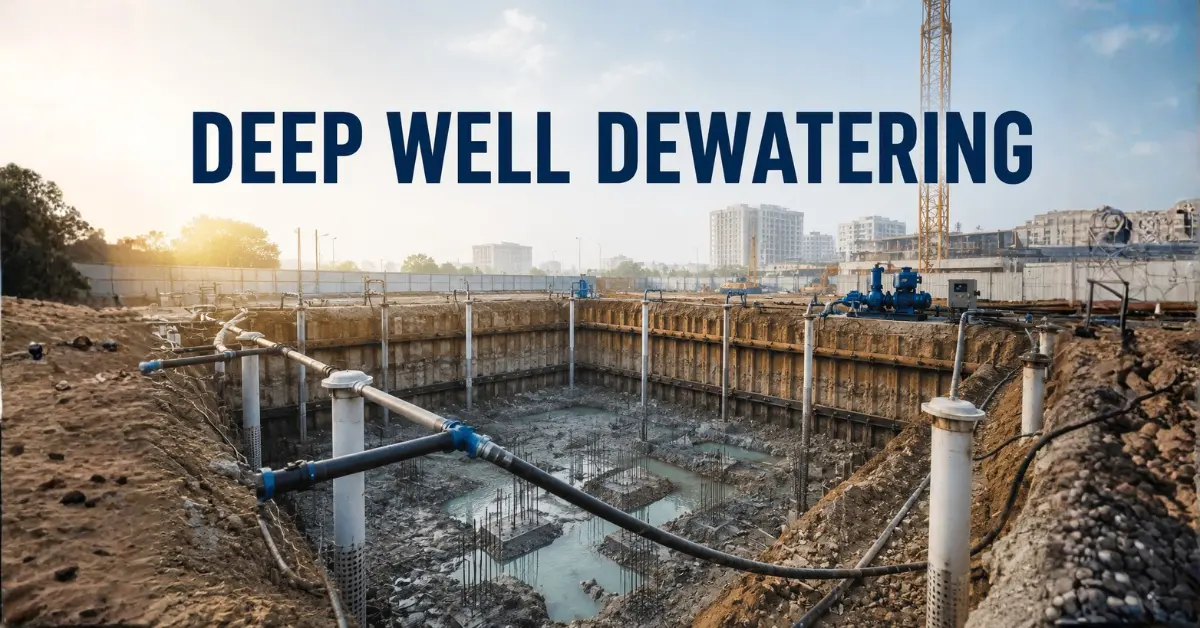
For very deep excavations, deep well systems are often more practical.
Wellpoint Spacing
Proper spacing is essential for creating continuous groundwater drawdown.
Spacing depends on:
- Soil permeability
- Pumping requirements
- Excavation dimensions
- Groundwater inflow rates
Pump Capacity
The selected pump must handle expected groundwater inflows while maintaining consistent vacuum pressure.
Undersized pumps can reduce system performance and increase project risks.
Installation Process
The installation process typically follows several steps.
Step 1: Site Investigation
Engineers conduct groundwater and soil investigations to determine site conditions and design requirements.
This phase may include:
- Borehole drilling
- Groundwater monitoring
- Soil permeability testing
- Hydrogeological assessments
Step 2: Layout Planning
The location and spacing of wellpoints are determined based on the excavation geometry and groundwater conditions.
Step 3: Wellpoint Installation
Wellpoints are commonly installed using jetting techniques.
High-pressure water is used to create a hole in the ground, allowing the wellpoint to be placed at the desired depth.
Step 4: Header Pipe Connection
Each wellpoint is connected to the header pipe using flexible swing connections.
Step 5: Pump Installation
The vacuum pump and discharge system are installed and tested.
Step 6: System Start-Up
The system is activated and groundwater levels are monitored to verify performance.
Step 7: Ongoing Monitoring
Groundwater levels, pump operation, and discharge rates are monitored throughout the project.
Advantages of Wellpoint Dewatering Systems
Wellpoint systems offer several advantages that make them popular across the construction industry.
Effective Groundwater Control
They provide reliable groundwater lowering for many excavation projects.
Flexible Installation
Wellpoints can be arranged in various configurations to accommodate different excavation shapes.
Relatively Fast Installation
Compared to some alternative methods, wellpoint systems can often be installed quickly.
Suitable for Urban Projects
The equipment footprint is relatively small, making the system practical in confined construction sites.
Cost-Effective
For shallow excavations, wellpoint systems are often more economical than deep well alternatives.
Limitations of Wellpoint Systems
Despite their advantages, wellpoint systems are not suitable for every project.
Limited Depth Capability
Vacuum lift limitations restrict the depth that can be effectively dewatered using a single-stage wellpoint system.
Reduced Performance in Clay Soils
Low-permeability soils limit groundwater flow toward the wellpoints.
Continuous Operation Required
The system generally needs to operate continuously throughout excavation activities.
Maintenance Requirements
Pumps, pipes, and connections require routine inspection and maintenance.
Common Applications of Wellpoint Dewatering
Wellpoint systems are used across numerous construction sectors.
Basement Excavation Projects
One of the most common applications is basement construction, where groundwater must be controlled before foundation work begins.
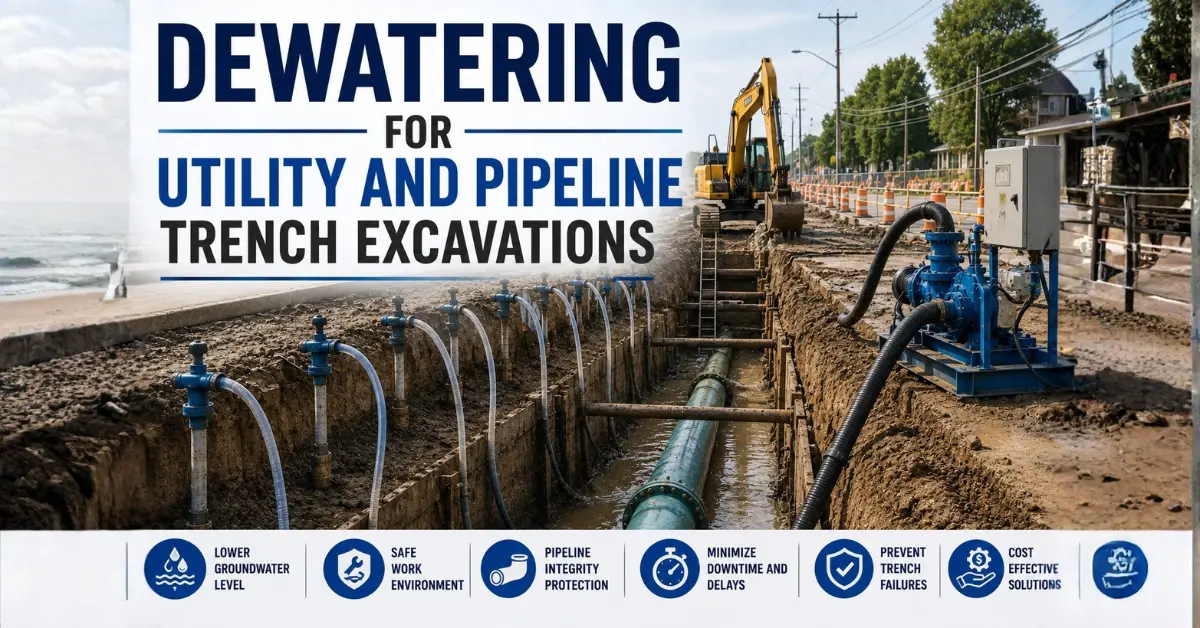
Utility and Pipeline Trenches
Wellpoints help maintain stable trench conditions and prevent water accumulation during utility installations.
Road and Highway Construction
Groundwater control improves subgrade stability and supports efficient construction operations.
Retaining Wall Construction
Dry excavation conditions improve safety and facilitate structural installation.
Commercial Building Developments
Large commercial projects often rely on wellpoint systems to support excavation and foundation construction.
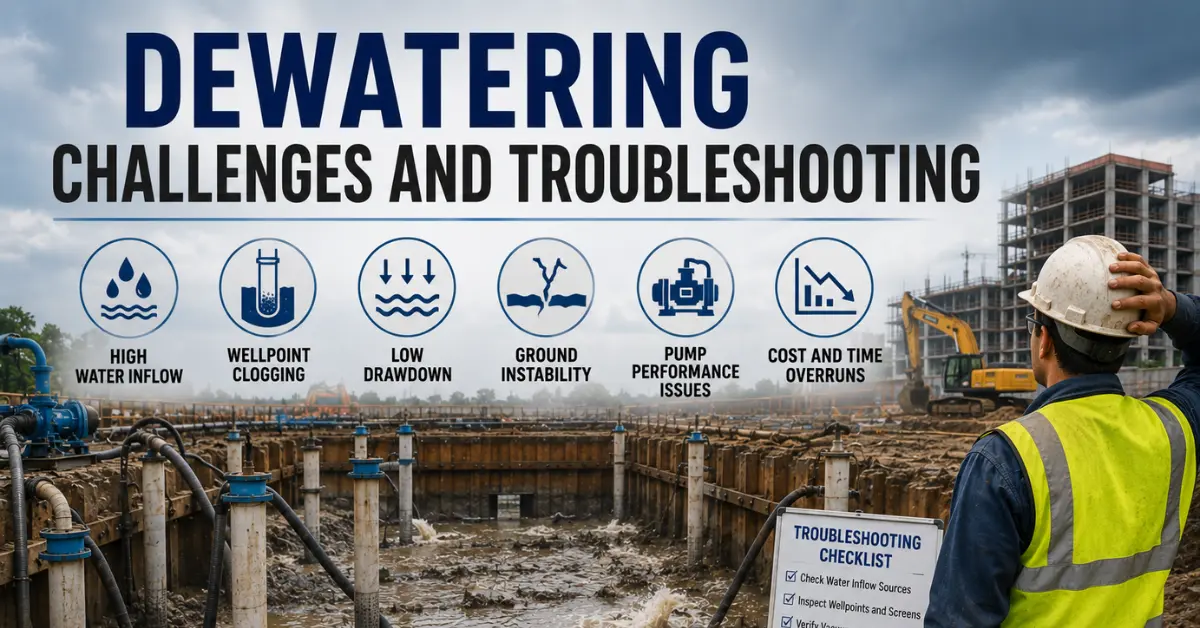
Common Challenges and Troubleshooting
Even well-designed systems can encounter operational issues.
Air Leaks
Air leaks reduce vacuum efficiency and can significantly impact groundwater removal rates.
Regular inspection of joints and connections is essential.
Clogged Wellpoints
Fine sediments may clog screens and reduce system performance.
Periodic cleaning may be necessary.
Pump Failure
Unexpected pump failures can quickly lead to excavation flooding.
Backup pumps should always be available.
Inadequate Drawdown
If groundwater levels are not lowering as expected, engineers may need to adjust spacing, increase pumping capacity, or install additional wellpoints.
Best Practices for Successful Wellpoint Dewatering
To maximize system performance:
- Conduct thorough site investigations.
- Design the system based on actual groundwater conditions.
- Install wellpoints at appropriate depths.
- Monitor groundwater levels regularly.
- Maintain pumps and equipment.
- Keep backup pumping equipment available.
- Follow environmental discharge requirements.
These practices help improve reliability and reduce project risks.
When Should You Choose a Wellpoint System?
A wellpoint dewatering system is typically the preferred solution when:
- Excavations are shallow to medium depth.
- Soil conditions are sandy or silty.
- Groundwater inflows are moderate.
- Flexible installation is required.
- Budget considerations favor cost-effective groundwater control.
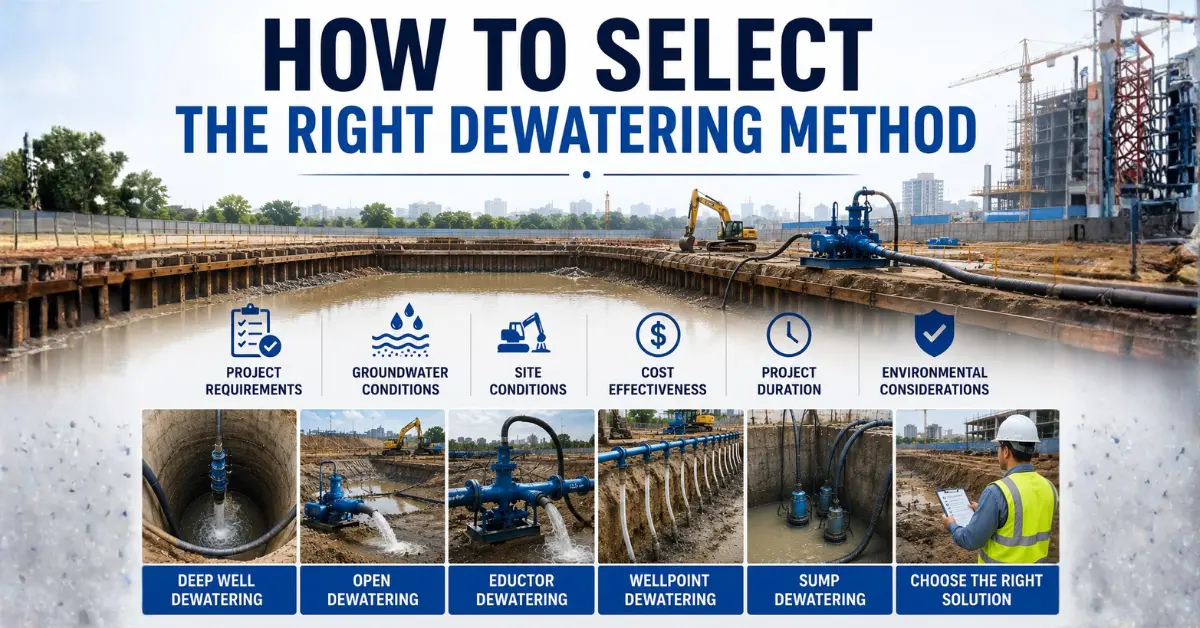
For deeper excavations or low-permeability soils, other methods such as deep wells or eductor systems may provide better results.
Frequently Asked Questions
What is a wellpoint dewatering system?
A wellpoint dewatering system uses multiple small-diameter wells connected to a vacuum pump to lower groundwater levels around an excavation.
What soil types are suitable for wellpoint dewatering?
Wellpoint systems perform best in sandy and silty soils where groundwater can flow easily toward the wellpoints.
How deep can a wellpoint system dewater?
Depth capability depends on site conditions and system design, but wellpoint systems are generally most effective for shallow to medium-depth excavations.
What is the difference between wellpoint and deep well dewatering?
Wellpoint systems use vacuum-assisted suction and multiple small wells, while deep well systems use larger drilled wells with submersible pumps for deeper groundwater control.
Can wellpoint systems be used for basement construction?
Yes. Basement excavations are among the most common applications for wellpoint dewatering systems.
Conclusion
Wellpoint dewatering systems are one of the most effective and widely used groundwater control solutions in the construction industry. Their ability to lower groundwater levels quickly and economically makes them ideal for basement excavations, utility trenches, road projects, and foundation construction.
Successful implementation depends on proper site investigation, careful system design, correct installation, and ongoing monitoring. When applied under suitable soil and groundwater conditions, wellpoint systems provide reliable dewatering performance, improve excavation safety, and help construction projects stay on schedule.
For projects involving shallow to medium-depth excavations in permeable soils, a wellpoint dewatering system remains one of the most practical and cost-effective groundwater control methods available.